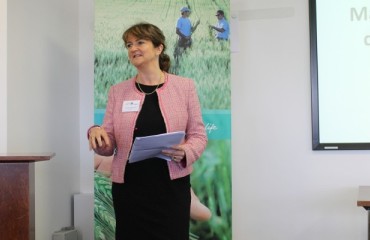
Food and Agriculture Organization celebrates World Food Day

Food and Agriculture Organization (FAO) of the United Nations (UN) and its member countries celebrate on 16 October World Food Day.
The theme for 2014 is Family Farming: "Feeding the world, caring for the earth", trying to focus world attention on the significant role of family farming in eradicating hunger, poverty and malnutrition and achieving sustainable development.
World Food Day aims to ensure that people all over the world have regular access to enough high quality food to lead active, healthy lives.
Their goals are to eradicate hunger and malnutrition, eliminate poverty and find sustainable ways to use resources such as land, water and air for the benefit of all.
“The world cannot do without the family farmer,” says Amy McMillen, Partnerships and Outreach Coordinator for FAO. “It’s because of the family farmer that we eat a variety of healthy foods every day. And yet, family farmers still make up the majority of poor and hungry people in the world. We must do more to incentivize, celebrate and exponentially improve the lives of family farmers to ensure all people have access to fresh, healthy food.”
Commitment to family farming
The face of family farming in North America is dynamic. Results from a new survey of 75 North American family farmers, led by Humanitas Global in collaboration with FAO and Food Tank, were unveiled at the Borlaug Dialogue in Des Moines, Iowa today. The results demonstrate what is at play for those who have stayed on the farm, chosen to leave the farm or taken up farming for the first time. A consistent takeaway from the results demonstrates that North American-based family farmers remain committed to family farming, despite the challenges that exist.
“The survey results and our conversations with farmers reinforce a deep affinity for family farming, but they also show that farmers are torn between a love for the land and trying to make ends meet,” said Nabeeha M. Kazi, President & CEO of Humanitas Global and Chair of the Community for Zero Hunger. “For those who no longer work the family farm, the importance of feeding their communities and the world remains very much part of their identity.”
Seventy-nine percent of survey respondents who have left the family farm said they remain involved in agriculture in their current careers. In addition, a majority of those who have left the family farm said they intend on returning in the future.
The greatest challenges for family farmers today include the cost of land, labor costs, government regulations and policies, climate change and the inherent risk of farming, as well as the disproportionate amount of work required given the financial returns.
The positive aspects
On the positive side, a connection with the land and food systems, independence and working outdoors were all cited as the principle advantages of being a farmer. Those who grew up and remained on farms, those who left farms to pursue other careers and new family farmers all spoke of tending to the land and watching food grow as the most fulfilling aspects of being a farmer.
Family farmers are facing economic challenges and beyond. In addition to tools and resources, family farmers are concerned about issues that all Americans worry about – including providing health care for their families and higher education for their children. And yet, so many people stay on the family farm or are committed to returning, because farming is fulfilling, intellectually stimulating and challenging – and it has shaped their values.
The challenges that family farmers face in the United States and throughout North America mirror the challenges seen globally. Climate change, low profitability and better off-farm opportunities all emerge as the greatest global threats to family farming.