How to manage crop pests and diseases in a changing environment
Linking Environment And Farming (LEAF), a British organisation for sustainable agriculture, and not-for-profit company Knowledge Transfer Network (KTN) held an industry debate on September 22 to explore new thinking on managing crops and diseases.
It examined how this can be achieved in a changing economic, environment and social world.
Leading academics, researchers, farmers and government bodies attended the one day workshop and looked at opportunities for reducing losses caused by pests and diseases in crops.
Speakers included Professor Peter Gregory Director of East Malling Research, Ed Moorhouse from G’s Growers, Rob Cannings from Exosect Ltd, and Andy Shaw from the Satellite Applications Catapult.
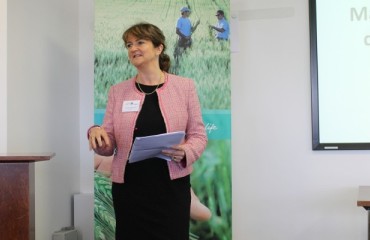
Speaking at the event, LEAF Chief Executive, Caroline Drummond (photo) said: “Reducing crop losses resulting from pests and diseases is becoming ever more important as the need for global food production continues to rise. Here in the UK, farmers and horticultural growers are facing highly challenging times due to pressures being brought to bear by an environment subject to technological, societal, regulatory, economic and climate change. Solutions to these challenges have to be addressed by taking a multi-disciplinary approach in order to bring new thinking and innovation into this complex and fluid picture.”
Key findings from the workshop included:
- Crops are vulnerable to pests and diseases and fragility is compounded by new species arriving via trade and climate change.
- These risks need to be communicated better to consumers and politicians.
- Integration is key – new techniques such as biocontrol and satellite remote sensing all have a role to play, but there is no ‘silver bullet’.
- We need to adapt faster than the pests around us.
- Innovation is often crisis driven, but there is an opportunity to be more pro-active.
- An understanding of the multi-dimensional situation is very important.
- Collaboration within the industry is required.