Storage: Saving Energy and Increasing Efficiency
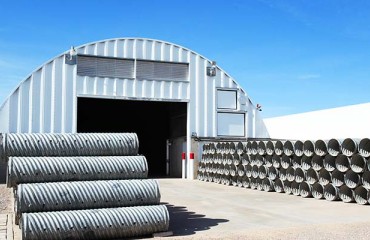
When discussing ways to increase the energy efficiency of potato storage facilities, the first thing store managers should consider is determining exactly just how much energy is being used and how. The review of the energy costs and comparison with benchmarks is called an audit, and it is a key step in learning what are the areas where savings can be accomplished.
Potato Businessreached out to storage specialists from Tolsma and Crop Systems to gain insight on the various energy saving solutions available.
Ventilation
Potato storage facilities require air movement through the potato stock, in order to eliminate field heat immediately after harvest, and to remove the by-products of respiration during the storage period. Experts agree that this is one of the areas with the most substantial energy saving potential.
The highest ventilation rate is required at cool down, so the fan capacity is sized accordingly. But once the potatoes are cooled to storage temperature, the ventilation requirement is significantly lower. At this point the ventilation rate is much higher than necessary. Operators usually use the fans intermittently instead of running them continuously, which saves energy. But research by the University of Idaho suggests that a low constant airflow is more desirable than periods of high airflow, followed by periods of no airflow.
Variable speed drive (VSD) controllers on fans allow continuous air circulation at a lower rate during the holding periods, which saves a significant amount of energy and reduces demand loads.
"Purging stores for CO2 can also be expensive, especially if it is done on a timer. We fit sensors to measure CO2 levels, and only purge when necessary. Check what CO2 levels your crops can cope with; keeping levels below 3,500 parts per million is expensive," says Ray Andrews, managing director, Crop Systems Ltd.
Jan van Maldegem, product manager, Tolsma also advises store managers to check the closure of hatches and doors.
"Rubber seals which are worn out cause openings between hatches and the window frame and the same can happen with doors. This will result in heat and moisture coming into the store, which will result in extra operating hours of ventilation and refrigeration systems."
Unloading during the night or early in the morning when temperatures are low - to avoid heat getting to the product, and also closing off some of the air-ducts when the storage is not full anymore, can both contribute to the overall reduction of used energy and costs.
You can read the rest of this article in the Summer Issue of Potato Business Digital magazine, which you can access by clicking here.