Handling and Conveying: Choosing the Best Option
Regardless of where it will be used, customers should be looking for conveying and handling systems that are reliable, durable and low maintenance, therefore reducing total cost of ownership.
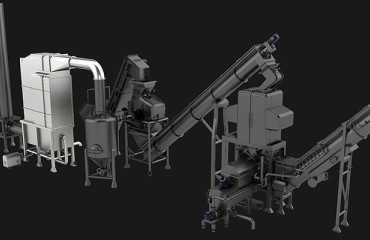
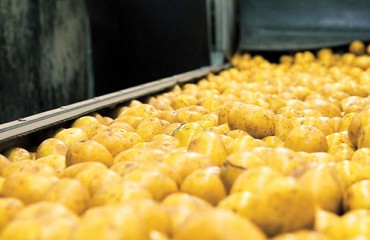
Conveying systems for potatoes can be broadly defined by the type of moving surface (flat belt, modular belt, web belt or rollers) and the shape of the moving surface (flat or troughed). Each variation has different characteristics and will be suited to different parts of a potato line depending on produce and site requirements. Alternatively, for more gentle produce handling or complex layouts, a flume system might be preferred.
Take your pick
As most equipment manufacturers agree, the best conveying systems will be practically invisible. To put this another way, a poor conveying system may under or over-feed machinery, cause damage to produce and bottleneck operations, all of which affects the customer’s bottom line. Modern conveying systems are integrated into the lines they feed. Machines and conveyors will automatically be started, stopped or changed in speed or direction to manage produce flow. Interfaces are simple with most conveying systems responding automatically to the logic of the machine they supply or receive from. Safety is critical with isolators on every motor and E-stops that shut lines down in an emergency.
According to Wyma’s Managing Director, Andrew Barclay, choosing the right conveying system allows the company to arrange processing equipment that best suits a customer’s site and processing needs, in order to optimize delivery of produce to each piece of machinery.
“Wyma has a philosophy of continuous improvement. We constantly challenge ourselves to improve, and we understand that it is not just the upfront cost of machinery, but the total cost of ownership that needs to be considered. Sourcing belt suppliers that provide high quality, long-lasting, fit for purpose belts that can also be delivered on time has been one of our most critical challenges,” Barclay says. “Nowadays, there are a large number of companies making conveyors but we manufacture worldwide, so equipment can be delivered to our customers faster, which seems to meet the highly competitive market requirements. We are also seeing trends where customers are running higher volumes so the conveyors need to meet these capacities and not be a bottleneck,” he adds.
Barclay also says that Wyma’s Octal range of belt conveyors are cost-effective and our most popular option. This range features a fully stainless-steel construction, food grade belt, and is available in a wide range of widths and lengths to suit. Roller beds provide the least resistance and therefore the lowest power requirement. Slat beds have a slightly higher resistance but fewer moving parts, which subsequently reduces the long-term maintenance requirements. Wyma’s Octal Conveyors can also incorporate sweeps for side exit of produce, or a mini-trough shape to keep produce away from the sides of the conveyor, which can reduce skinning.
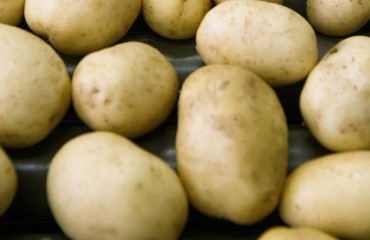
On the other hand, full troughed conveyors are heavy duty construction with rubber belts and are used where high levels of dirt are present and for high produce throughputs, while web belt conveyors suit wet and/or dirty conditions, where processors want water and dirt to fall through the belt. Rubber molds can be used to gentle handling. Furthermore, modular belt conveyors are most often used for clean produce since they are easier to wash down and are suited to environments where hygiene requirements are higher, while roller conveyors singulate and/ or rotate potatoes. These can be used before electronic graders, optimizing grader efficiency, organic or chemical treatment applications or manual inspection.
Lastly, flumes require only a water pump, therefore can be more cost effective and can turn corners with no drops, making them the most delicate handling conveyor system. With the exception of roller conveyors and flumes, all other Wyma conveyors can be elevators, the managing director concludes.
To read the rest of this article please access your complimentary edition of the Potato Business Dossier by clicking here.