Christophe Vermeulen: “I Hope for a Calm Year But I Don't Expect It”
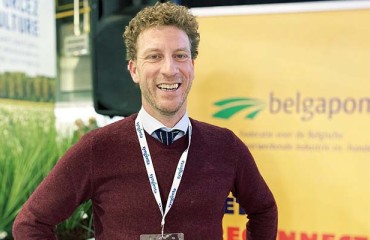
Present in Kortrijk during the 2022 edition of Interpom, Christophe Vermeulen, Belgapom’s CEO talked to Potato Processing International about the challenges of 2022 and the organization’s future strategy. Increasing pressure from European regulations, rising costs, and a general sense of uncertainty are driving farmers to cut back on their acreage and even switch to other crops, at a time when growing demand from consumers should be pushing things the other way around.
What does this past year look like for your organization when you draw the line?
It has been a difficult year and a half and it started with the wet season in the summer of 2021. And then of course came the backlash of COVID and the crisis in costs and transport and things only worsened when the war in Ukraine started. For the potato sector, one of the biggest impacts came from the sudden shortage of sunflower oil. That was the first big crisis of this year, and it was something that we had to act on very swiftly we needed the government as well because we needed to change the composition of our product at very short notice and we could not really ask for permission from the consumer, we just had to do it because there was no available oil.
Of course if you change from sunflower to, let's say, palm oil - which happened quite a lot - we had to communicate it in a clear way to the consumer but it was challenging because you cannot change the packaging overnight - it takes six months to change - so we had posters in shops and there was an official website by the government where people could find more information on the attributes of the oil that was used. It was a quick and good solution to the problem and in the end, it worked exceptionally well. Companies found alternatives quite quickly but, of course, at a big cost, because when demand rises, the price rises as well.
What are your expectations for 2023, keeping in mind the legacy of last year, but also the current challenges?
Many of the government officials here that I talked to are concerned that farmers are complaining about new regulations coming into effect and as a result they might be forced to reduce their acreage.
Farmers will react because there will be a flood of new European regulations as a result of the 'farm to fork' strategy and the 'green deal' whose target is 2030. We're in 2023 - that's almost one-third of the decade already gone, so many things have to be changed - like the use of pesticides, for example.
Another current issue in Belgium, especially on the Flemish side, has to do with fertilization and the new regulations around that. A leaked plan of the ministry of environment surfaced and it was actually quite surprising.
There were a few very important things mentioned in the plan - no more fertilization after the first of August, which meant you could not harvest anymore after the first of September. This alone would have meant that in certain areas where the water quality is poor - and that means the whole province of West Flanders and East Flanders where all the potatoes and all the vegetables are grown - would see a reduction of 80% of their acreage.
To read the complete article, please refer to our latestJanuary-February 2023 print issue ofPotato Processing International.