Delivering Goods the Right Way
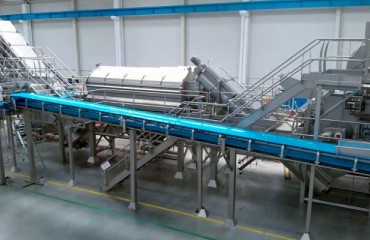
A conveyor's capacity to deliver goods the right way by aligning, singulating, spreading, and/or controlling the flow for that particular operation can increase the performance of the equipment by up to 50% when it feeds a digital sorter, cutter, blancher, dryer, freezer, or packaging machine.
Product trajectories, decelerations, and delicate handling are frequently required while collecting product following these devices. Other conveying issues include mechanical grading and creating effective packaging distribution systems.
Understanding the nature of the product, how it slides, rolls, and flies, as well as how to present the product at each step in the process to optimize each machine's performance, is important to build perfect conveyors for every application. To feed, collect, grade, and distribute materials, the art and science of conveyor design combine the ideal combination of chutes, lanes, diverters, gates, geometry, speed, and stroke.
Unique Technical Challenges
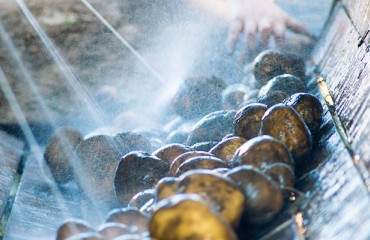
Each conveyor faces a separate set of technological difficulties at different stages of the potato processing plant. Making sturdy conveyors capable of safely handling heavy whole potatoes in an unclean environment is the main problem at reception. Since sanitation can constantly be improved to better safeguard food safety, it is a common problem elsewhere.
“Where conveyors feed optical sorters, ADR systems, fryers, dryers, freezers, and other machines, evenly spreading product to maximize the performance of the operation is key. Throughout the line, making transitions smoother is important,” Key Technology’s Rudy Sanchez, Process Systems Product Development Manager said.
In general, the conveying challenges potato processors are always working on include improving reliability and maintenance, enhancing sanitation and ease of cleaning, increasing throughputs, and maximizing the performance of each application.
In the food processing sector, keeping things clean is on the top of the list of priorities. When it comes to keeping a processing plant clean and operating efficiently while minimizing downtime, hygienic equipment design is important.
“The open architecture of vibratory conveyors is the most sanitary-friendly technology available – it’s easy to clean and simple to prove it’s clean by swabbing and testing. Machines designed with tool-less parts and open access are easier and faster to clean, require less labor, can be cleaned more thoroughly, and necessitate fewer supplies and water, saving additional resources and dollars for a producer,” Mike Barber, Regional Sales Manager, PFI, said.
You can read the rest of this article in your complimentary e-copy of Issue1 of Potato Business Digital 2023 magazine, which you can access by clicking here.