Achieving the Closest to Ideal Potato Storage Conditions
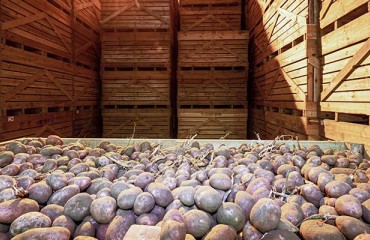
The loss of moisture, rot and physiological disintegration limit both potato quality and storage life. The storage temperature, relative humidity, air movement, and gas composition all have a direct impact on these processes.
Many technologies have been created over the years in an attempt to achieve the ideal storage state in an enclosure, based on the geographic region, volume produced, consumer demand, and marketing strategies.
Potatoes, as living organisms, require efficient storage management. Bruise avoidance is a key aspect of preserving potato quality while minimizing weight loss and storage illnesses.
Over the years, researchers have made several attempts to explore the feasibility of various storage systems for the safe keeping of agricultural commodities. There has been the use of conventional refrigerated rooms, vented cold rooms, bulk storage facilities, jacketed storage, and other types of controlled atmosphere (CA) storage such as Marcellin and Atmolysair.
The goal of storage is to keep tubers in their most edible and marketable condition while also ensuring a consistent flow of tubers to markets and processing companies throughout the year. The potato variety, pre-storage settings, storage circumstances, and storage period are the four variables used to calculate storage losses.
“It must be realized that storage losses cannot be avoided even by optimal storage. Good storage can merely limit storage losses in a good product over relatively long periods of storage. Storage losses are often specified as weight losses and losses in the quality of potatoes, although the two cannot always be distinguished,” according to the “Potato Storage Technology and Store Design Aspects” report.
Storage losses are mainly caused by the processes like respiration, sprouting, evaporation of water from the tubers, the spread of diseases, changes in the chemical composition and physical properties of the tuber, and damage by extreme temperatures. These processes are influenced by storage conditions. All the losses mentioned above depend on the storage conditions and therefore can be limited by maintaining favorable conditions in the store.
Nevertheless, the storability of potatoes is determined before the start of storage by factors such as cultivar, growing techniques, type of soil, weather conditions during growth, diseases before harvesting, potato maturity at harvesting, and damage to tubers during lifting, transport, and filling of the store.
You can read the rest of this article in your complimentary e-copy of Issue 1 of Potato Business Digital 2023 magazine, which you can access by clicking here.