
Late Blight Source Identified
A scientist from University of Florida has pinpointed Mexico as the origin of the pathogen that caused the 1840s Irish Potato Famine, which may help researchers find a cure for the USD 6 billion-a-year disease that continues to evolve to this day.
The late blight disease killed most of Ireland's potatoes, while today it costs Florida tomato farmers millions each year in lost yield, unmarketable crop and control expenses.
For more than a century, scientists thought the pathogen that caused late blight originated in Mexico. But a 2007 study contradicted earlier findings, concluding it came from the South American Andes, phys.org reports.
UF plant pathology assistant professor Erica Goss wanted to clear up the confusion and after analyzing sequenced genes from four strains of the pathogen, found ancestral relationships among them that point to Mexico as the origin. Potato late blight, which flourishes in cool, damp weather, is caused by the pathogen phytophthora infestans.
"The pathogen is very good at overcoming our management strategies," said Goss, a UF Institute of Food and Agricultural Sciences faculty member. "To come up with better solutions to late blight, we need to understand the genetic changes that allow it to become more aggressive. By understanding past changes, we can design new strategies that are more likely to be robust to future genetic changes."
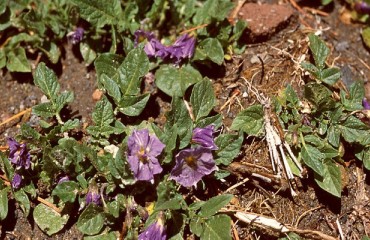
Relatives of the cultivated potato, like this plant, Solanum demissum, have co-evolved with the the pathogen that caused the Irish potato famine. (Photo by Niklaus Grunwald, courtesy of Oregon State University)Goss and eight colleagues analysed the genes of potato late-blight pathogens from around the world. Scientists sequenced four genes from more than 100 phytophthora infestans samples, plus four closely related species, to tease out the pathogen's origin.
Knowing the origin provides insight into its genetic diversity and the ways it adapts to different environments, Goss said.
The pathogen costs USD 6 billion a year globally between direct crop damage and spraying, she said. In Florida, it damages tomatoes far more than potatoes.
"Just when we think we're on top of it, a new strain shows up," she said. "New strains have repeatedly appeared in the U.S. that are more aggressive or resistant to fungicides. This pathogen just keeps coming."
Goss wrote the paper, published online Monday by Proceedings of the National Academy of Sciences, with scientists from eight other university and government agencies.
Source: phys.org, Oregon State University