Exclusive: Investing in Track and Trace Systems Is of Central Importance
Traceability of products is a trend that has been taking place in the agri-food sector in recent years, both at the growers and processors from fresh potatoes to French fries. In recent years, several crises have occurred in the food sector and that’s why consumers increasingly want to know the origin of the product.
By Jan van Maldegem, product manager Tolsma-Grisnich.
Consumers are becoming increasingly aware of what product they are buying and asking for more insight into the products, to be sure it’s safe and healthy and has been produced sustainably produced. More and more companies are investing in track and trace systems to meet this demand and to work more efficiently themselves.
Keeping it up-to-date
In potato processing companies, tracing back products can be of great importance. These companies sometimes receive raw material from hundreds of different suppliers to process into fries or chips. If, for example, it appears that there is a diseased or inferior lot, the company can link this back to which supplier it comes from and take its actions immediately to guarantee food safety. Only with a up to date track and trace system it is possible to deal with incidents effectively.
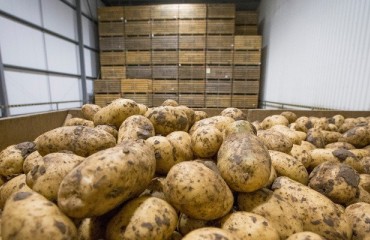
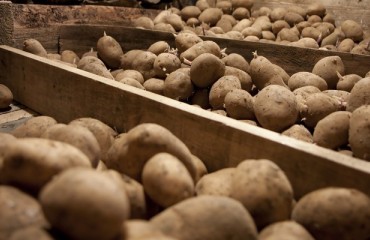
Another reason of increasing interest in the last years, is the number of varieties of potatoes have risen sharply caused by the wishes of the customer for different tastes and products. Box storage of potatoes and a track and trace system keeps this easily manageable in the processing plant. Many companies already invest in such a track and trace system to optimize and control this process. In order to ensure an up-to-date overview of the storage and overview of the entrepreneur himself. Various sources of information can be linked to each box in the storage, for example about varieties, grades and suppliers. This saves a lot of physical actions, because it is now all digitally visible, anywhere, anytime.
A typical storage process contains four phases consisting of; receiving/filling, moving, storage and emptying. When receiving the product, the necessary product information is assigned to the box. This data can be prepared in advance or imported from other files so that during the busy intake of the product this can be done quickly. Then the boxes are put into storage and exact position is logged during the filling of the storage. When this information is tracked via a track and trace system, it is easy to find out how many boxes there are of a certain variety, supplier and in which storage location these boxes are located. This increases the efficiency of logistical and administrative processes in the company.
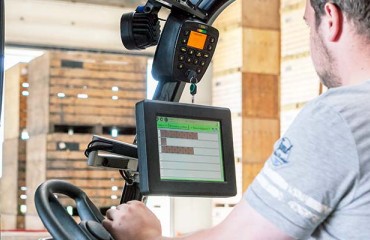
A typical track and trace system often works by sending data collected by the fork lift through the wireless network (WiFi) in the storage rooms and is also backed up several times a day for security purposes. When investing in a track and trace system, a well-functioning network is a requirement. For an optimal implementation of such a system in a company it’s very helpful to take some time to think about and write down the used work flow in the company. This means think about which processes are carried out with the boxes (filling, moving, emptying etc.) by who and in which physical space. Only when the work flow is clear for all people (both office and work floor) who are involved in the implementation process, a good end result will be achieved. The track and trace system should be implemented in such a way that it doesn’t bring extra work/actions for the fork-lift driver. The only aim/benefit of such a system is that it should guide and support the normal workflow of the driver/operator. When the normal operation has to be adapted to fit the system, the acceptation will not be successful.
You can read more in our print magazinePotato Processing International (Jan/Feb 2019)!