Preventing the Spread of Pathogens in a Storage
A proper disinfection of potato storage and equipment is effective in preventing the spread of pathogens that incite contagious diseases.
Cleaning and disinfesting the surfaces that seed potatoes come into contact with will reduce the potential for the spread of causal agents of ring rot, black leg and other soft rotting bacteria. Additionally, surfaces contaminated with residual spores of various fungal diseases must be sanitized. Potato Business Digital asked two experts from Crop Systems and Tolsma to explain the best practice of disinfection storage.
Best Storage for Proper Hygiene
Whilst some potato stores are still constructed using timber, the experts from Crop Systemsconsider new build bulk stores which use concrete walling. Concrete walling means there is no timber to rot, better hygiene and increases the longevity of the store.
On the other hand, the specialists from Tolsma suggest using steel. Using steel in the construction of store houses stops the spreading of diseases. Steel can be easily cleanedand does not accumulate molds and pathogens.
According to Tolsma, the best way to stop mold and pathogens is to keep the tubers dry. This is because pathogens like humidity. Furthermore, good wound healing, drying and internal ventilation are necessary for a good start to the storage season.
Tolsmarecommend investing in an airbag system for the boxes or compartments where the potatoes are stored. They also suggest fitting a smaller "letter box" - type system for the additional drying and heating of a particular number of boxes. This investment should be made in several smaller units, rather than a very large scale as this allows for better control.
“This system is helpful for logistics in a seed potato production farm.It is also of great value in situations when a disease is found in a specific potato lot so that it can be traced to which set of boxes it was stored in”, according to Tolsma.
Steps of Disinfection
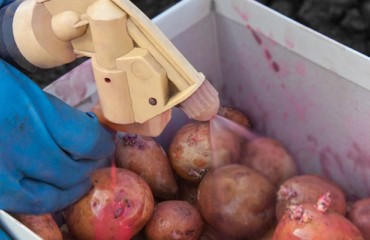
“There are varying levels of practice for store hygiene. However, the best practice is normally achieved by applying disinfectant to the entire store. This regular practice in store hygiene will help remove spores and fungal fragments of most pathogens”, the experts from Crop System explains.
The removal of dust and debris, as well as power washing, can be effective. However, for stores where rot has occurred, disinfectant is normally used.
Prior to disinfecting, it is crucial to steam or pressure wash the areas which have been exposed to ring rot contamination.
You can read more on storage disinfection in our latest issue of Potato Business Digital magazine!