Why Ensuring a Resilient and Traceable Potato Supply Chain is Good Business
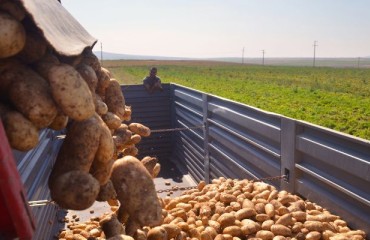
Ensuring a resilient and traceable potato supply chain is not only helpful but also necessary. As global consumption habits shift and the demand for transparent sourcing grows, businesses in the potato sector must keep one step ahead. Growers and processors that adopt these ideas and solutions can assure a smoother voyage for their food and, by implication, their businesses.
To prevail in the competition or at the very least endure, the supply chain must accomplish a strategic objective. The supply chain needs to be able to deliver affordable, high-quality goods with the least amount of risk to prevail in a market competition.
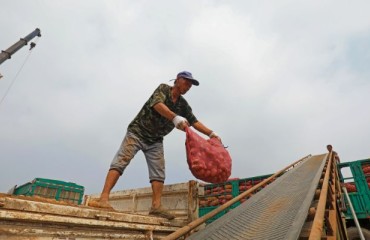
Supply chains are used by the majority of growers, packers, and shippers of fresh potatoes to transport their goods to retailers or wholesalers, who then accept and sell the potatoes. This covers several marketing, distribution, processing, and intermediate production procedures. It can be thought of as a domino effect, where modifications at any point in the chain have an impact on the entire supply chain and often result in price adjustments.
In a supply chain, consumer money flows in the opposite direction to the various chain participants, while resources and materials move downstream for the creation of goods and the provision of services. A productive potato supply chain yields more returns per unit of land, time, and labor hours, which makes it essential for maintaining rural wealth and a sustainable way of life.
Since fresh products, including fresh potatoes, are particularly sensitive to supply and demand, demand forecasting becomes essential to supply chain management in general and to boosting producer profitability in particular.
The product typically undergoes so many form changes at various handling stations that something is sure to happen. Given the complexity and diversity of the potato supply chain, food traceability projects are a major focus for enterprises globally.
This guarantees that consumers and food firms can obtain potatoes for their chips or fries that are of the highest caliber, acquired sustainably and responsibly.
The complexity of supply chain management has grown along with the globalization and fragmentation of supply chains. Consequently, businesses need to implement an efficient supply chain management procedure, to make supply chains less vulnerable to disruption and carry less risk.
Risks associated with the supply chain can include things like market volatility, supplier shortages, and legal infractions. Global supply chains operate across numerous national and international legal frameworks, making it challenging to monitor regulatory compliance from start to finish.
You can read the rest of this article in your complimentary e-copy of Issue 1 of Potato Business Dossier 2024, which you can access by clicking here.