IoT's Data Recipe for a Smoother Food Manufacturing Process
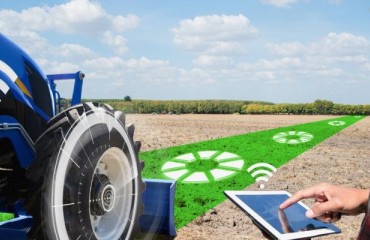
The Internet of Things (IoT) is a linked network of computer devices, both mechanical and digital, that employs sensors to generate unprecedented volumes of essential and comprehensive data on systems to enhance them.
Without the need for human participation, computers may connect with other machines or operators and transport this data via a network to facilitate easier and more efficient task completion. The ‘thing’ in IoT is defined as a physical object that can be assigned an IP address, with the ability to send data over a network. Such sudden accessibility to transmittable data has translated into new ways for companies to monitor their machines. The unexpected ease of access to transmittable data has led to novel methods for machine monitoring by businesses.
“With software solutions to analyze the data, the opportunities for IoT in the food industry are almost limitless. The implementation of IoT enables better management of the food supply chain at all levels, from raw materials within the factory to the delivery of product to customers and consumers. Moreover, it simplifies the process of data collection, enables food companies to ensure higher levels of traceability and safety in all supply chains, and helps to reduce waste, costs, and even risks, at all stages of the process,” the “IoT application in the Food Industry” report reveals.
The internet-based networking of industrial machinery and equipment is known as the 'Industrial Internet of Things,' or 'IIoT.' From handling raw materials to frying and packing, IoT technology may be utilized in the food sector to monitor and manage the many phases of the manufacturing process.
The Need for a Scalable Platform That Could Bond Clarebout’s Systems Together
Data management is nothing new to Clarebout, who has been using a popular flow-based programming tool for a while. Clarebout required a scalable platform that could act as a data management glue to unite its systems to advance. For this reason, the business contacted Crosser.
“Clarebout got stuck in from the start. A major benefit of using Crosser is that no downtime is required when deploying new logic or data pipelines - so Clarebout could continue its operations without a hitch,” Andrea Magnago, director of international sales at Crosser, mentioned.
The first prerequisite was to record every piece of information flowing across the shop floor, such as machine health and status, quantity of ingredients utilized, and time taken to finish specific plant activities. The next step was to connect an enterprise resource planning (ERP) and manufacturing execution system (MES) to all of this production data. All levels of the company, from the shop floor to the top floor, would have access to the data thanks to the MES and ERP.
The utilization of edge analytics software facilitates real-time pre-processing of data generated by sensor-rich assets at closer proximity to their source. Crosser's edge analytics software is put on a server, or virtual machine, where it can analyze data from numerous on-premise sources when it is implemented on-premise, which is usually the shop floor.
Even if a simple potato must go through several production steps to become its frozen finished product, handling this data doesn't have to be a messy procedure. Clarebout can make sure its advanced manufacturing facilities produce products on schedule by processing data close to the source in an agile manner without the need for complicated code.
You can read the rest of this article in your complimentary e-copy of Issue 2 of Potato Business Digital 2024 magazine, which you can access by clicking here.