The Economics of Damage and Bruising Prevention
Potato bruising is a serious problem in potato production worldwide. Damaged potatoes going into storage can cause deterioration of the entire crop. Potatoes bruised during handling operations will be rejected by processors looking for perfect material to make perfect potato products. Estimates indicate that more than 60% of some crops are damaged in some way which leads to financial losses running into Billions and a massive waste of crop. The effects of such losses to any potato-related business cannot be over-estimated.
By Martin Lishman
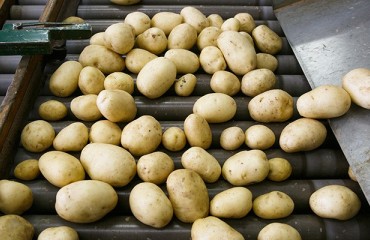
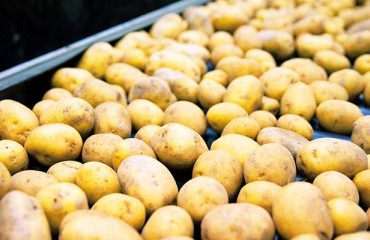
Achieving the highest quality in all types of harvesting conditions can be difficult, but mist spraying has been shown to reduce bruising, particularly in dry conditions when dolmen rollers tend to cause potatoes to bounce. The fine mist spray from the nozzles in a spray bar positioned over the rollers dampens both the potatoes and the rollers in the harvester. This lubricates the movement of the potatoes over the rollers and helps to prevent them being pinched and damaged. Lifting conditions can be highly variable, so a misting unit such as the Harvester Mister should be standard equipment fitted to all harvesters in all conditions.
Monitoring Damage and Bruising
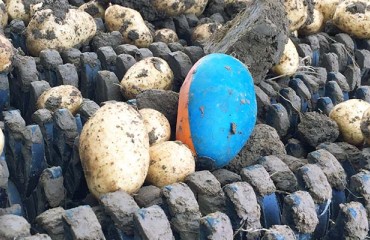
The huge potential losses caused by bruising is a clear incentive for growers and processors to monitor bruising, take preventive action and reduce their losses. If the solution is economical in relation to the size of the losses, it should be grasped with both hands. An example of this is an electronic potato, such as the TuberLog. If this is used regularly bruising problems caused by poor machine maintenance or incorrect settings can be detected quickly before more damage takes place. Machine settings are often changed, but the effects on bruising may not be realized. A quick check with an electronic potato can help to ensure bruise-free working and provide peace of mind that quality standards are being maintained. TuberLog is an impact sensor embedded in a synthetic shape that mimics the size, shape, density and movement characteristics of a typical ‘ware-sized’ potato. It records impacts while moving with real potatoes during harvesting and processing and locates damage and bruise-causing parts of machinery. The impacts are transmitted instantly by Bluetooth so the operator can immediately locate the impact source and change machine settings to reduce impact levels and minimize bruising. The advantages of using an electronic potato will be clear to growers, producers and processors through an increased return on their investment in the potato crop and retention of key customers through the consistent supply of high-quality potatoes. Manufacturers of harvesting and post-harvesting machinery can benefit by being able to demonstrate the quality levels of potatoes passing through their machines and assisting users to set them up for optimum performance. Machinery designs can also be improved by using an electronic potato to identify significant impacts levels. Agronomists and crop consultants often use an electronic potato to advise on the ideal machine settings for bruise-free production and to gather evidence for adherence to quality control procedures. On a broader front, research and development technicians can investigate materials and handling techniques that would reduce the risk of damage to potatoes and determine thresholds for the risk of damage due to impact force to potatoes of different varieties and different growing and storage conditions.
You can read the rest of this article by accessing your complimentary edition of the Potato Business Dossier by clicking here.