Improving the Industry's Operational Competence Through Software-Hardware Synergy
Artificial intelligence, or AI, is a type of technology that can think and act similarly to a person. Computer technology or software combined with AI allows it to learn from human experiences and do tasks almost identically to humans. Machine Learning, or ML, on the other hand, is a type of AI that can self-learn without being programmed by referring to the data it receives regularly.
AI and ML are two important technological advancements that, if properly utilized, might alter a variety of industries, including the potato processing business. Sorting, grading, and examining both ingredients and products are some of the most typical AI applications. AI may also aid in two ways: by establishing standards and specifications, and by assisting in the identification of a cause if a product begins to deviate significantly from them.
Key Technology, a supplier of sorting systems, starts most applications with a baseline “sort recipe” of what the product should look like.
“However, the result is always a sorter that is custom-programmed specifically for the unique processing line on which it is installed, because each installation has unique definitions of a good in-spec product as well as the exact defects and the types of foreign materials and contaminants that must be eliminated,” Marco Azzaretti, Key Technology director of marketing said.
The potato processing sector is one of the most important businesses among the different industries that sustain a relatively high employment rate globally. The human workforce plays an essential role in the smooth execution of the production and packaging of processed potato products. Due to the involvement of humans, this sector is sometimes failing to match the level of market demand and also lacking in food safety.
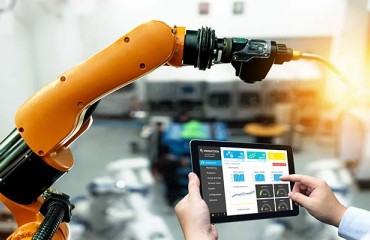
To overcome these issues in the industry, software and hardware integration represents one of the best possible solutions. This approach is based on artificial intelligence (AI), machine learning (ML), or deep learning (DL) algorithms. By using the AI-based system, the potato processing and delivery processes can be efficiently handled and also enhance operational competence.
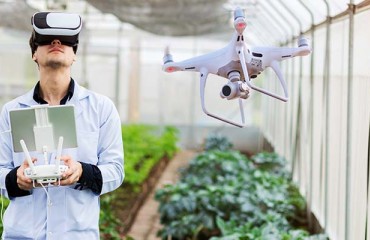
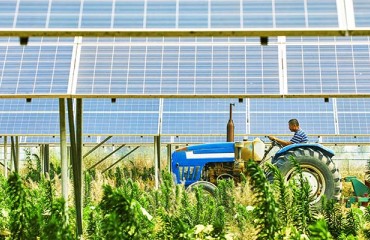
AI could significantly improve packaging, increase shelf life, and food safety by making a more transparent supply chain management system. With the help of AI and ML, the future of the potato processing industry is completely based on smart farming, robotic farming, and drones.
ML methods, such as principal component regression (PCR), hierarchical cluster analysis (HCA), support vector machine (SVM), partial least squares regression (PLSR), multiple linear regression (MLR), locally weighted partial least squares regression (LWPLSR), artificial neural network (ANN), and least square support vector machine (LS-SVM), have been widely used in food analysis.
You can read the rest of this article in your complimentary e-copy of Issue 1 of Potato Business Dossier 2022, which you can access by clicking here.