From Research to Series Production: Transforming Food Freezing Innovations into Industrial Machinery

The food industry is in a constant state of evolution, driven by consumer demand for fresher, healthier, and more sustainable products. One field that has seen tremendous innovation is food freezing, an essential process in the global food supply chain.
Cutting-edge research in freezing methods, such as isochoric freezing, is advancing food preservation, but the journey from a scientific breakthrough to industrial machinery like Individual Quick Freezing (IQF) requires extensive development and adaptation.
Understanding Research-driven Innovations in Food Freezing
Food freezing technology has undergone major changes in recent years. Traditional freezing techniques have focused on reducing temperature rapidly to slow bacterial growth, but they can degrade food texture and nutritional quality due to the formation of ice crystals within cells. Emerging methods like isochoric freezing offer promising improvements by maintaining food texture and nutrients.
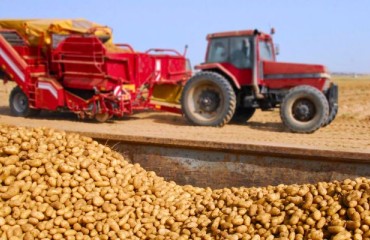
Unlike conventional freezing, isochoric freezing involves placing food in a liquid medium within a sealed, rigid container and cooling it below freezing while keeping the pressure constant. By avoiding the expansion typically caused by ice formation, this process preserves cellular structure, making it particularly valuable for delicate foods such as potatoes.
“Cut potatoes frozen in an isochoric system showed better quality properties in terms of drip loss, volume shrinkage, and texture than cut potatoes frozen at atmospheric pressure or individually quick-frozen potatoes. […] The freezing temperature/pressure and the processing procedure had the greatest effects on the quality of thawed potatoes. Samples treated at high subfreezing temperatures with pressures below 71 MPa retained their overall quality, independent of the processing procedure,” experts behind the “Effects of Isochoric Freezing Conditions on Cut Potato Quality” paper wrote.
Another approach is the cryogenic freezing technique. It uses gases like nitrogen or carbon dioxide to freeze food rapidly. It’s effective for preserving food quality but requires substantial research to optimize for various food types and environments.
Other innovative techniques such as high-pressure freezing, or cryo-seeding, where ice crystallization is carefully managed, show potential for future advancements.
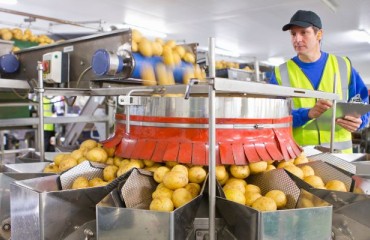
Innovations like these are changing what’s possible in food preservation, allowing for less energy-intensive processes and higher-quality food products. However, moving from lab-scale to large-scale manufacturing requires extensive steps and expertise to ensure these technologies are reliable, safe, and cost-effective for widespread use.
You can read the rest of this article in your complimentary e-copy of Issue 4 of Potato Business Digital 2024 magazine, which you can access by clicking here.