Building Efficient Potato Storages is a Job for Pros
Potato tubers are living, breathing, biologically active organisms that require optimal storage conditions to retain their quality at harvest. Growers must understand the factors that influence tuber health and quality to build efficient storage facilities.
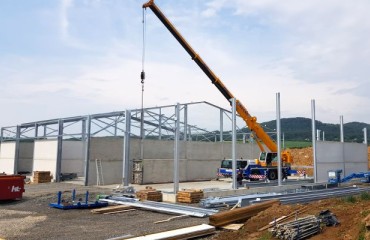
Basic structural requirements for potato storages include wall strength to resist potato pressure, floor strength to support the load due to truck and equipment traffic, insulation to reduce or prevent structural framework, and insulation moisture loss. In addition to the loads exerted by the potatoes, the building must also support other forces such as wind and snow. The ideal storage conditions include ventilation and cool temperatures, high humidity, and no light.
Knowing that, according to Horticultural Development Company (HDC) experts, when considering building new stores, the owners should understand the costs, have a clear idea of what their requirements are, and seek the advice of a specialist engineer before starting. That means the design of storage structures should be done according to well-established standards. Structural (wind, snow, crop, and floor loads), insulation (thermal requirement, fire retardant, and moisture removal systems), mechanical (ventilation, heating, and humidification systems), electrical, and control systems must all be considered.
The Primary Goals of Storage
Overall, an ideal storage environment must be provided if the tubers are to be stored for up to 10 months. Potatoes go through four different storage phases (curing, cooling, long-term storage, and marketing), each requiring a different environment.
“As a potato store manager, it is important for you to be able to deliver good quality potatoes throughout the entire storage season. […] Long storage starts with the quality of the crop coming in. Don’t store weak batches, or make them easily reachable to fast remove them. Also, when willing to store a crop for a longer time choose the right variety which is suitable for long storage,” Jeroen van Kappel, sales director, Mooij Agro explained.
Future consumption, future processing, and seed reserve maintenance are the primary goals of storage. They allow for better processing capacity utilization, better production and consumption tuning, and higher seed potato quality. Semi-perishable goods, such as potatoes, have a high natural moisture content. These products are more susceptible to quality loss than cereals because drying techniques cannot be used to preserve them.
Moisture loss leads to quality loss and, eventually, unmarketable produce. It is obvious that there is a risk of unacceptable moisture loss, disease spread, mold infections, and insect pests. The main conservation factors for this group of products are low storage temperature, high relative humidity, and control of air composition. Storage conditions must be well controlled to ensure a high-quality product; however, economic conditions do not allow for full air conditioning.
You can read the rest of this article in your complimentary e-copy of Issue 3 of Potato Business Dossier 2022, which you can access by clicking here.