High Productivity and Flexibility, Backed by High Tech Solutions
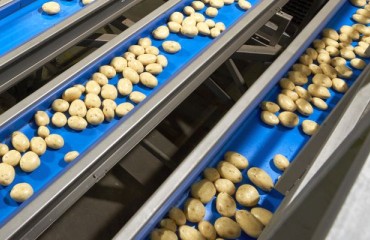
With fresh vegetable sales buoyed by people cooking more at home during the COVID-19 pandemic, current inflation, and competition among supermarkets to offer the best deals on fresh produce, packers must examine every layer of their business to eliminate inefficiencies.
Many potato fresh packers are currently at capacity. Some are even turning down work because they are too busy. Other packhouses, on the other hand, have excess capacity but cannot attract new customers. Technical capabilities frequently explain two very different scenarios by the same factor. Packers can no longer gain or retain large customers unless they have the technology to operate at high productivity and flexibility.
“To gain or retain contracts, packers are asking us, as solution suppliers, to review their processes and use our experience of dealing with the full spectrum of the supply chain, starting with the grower all the way through to the supermarket. It’s all about getting the right quality product in the right place at the right time and retaining a margin by handling the crop gently and efficiently while using minimum labor and resource input such as electricity and water,” Duane Hill, managing director, Haith Group, said.
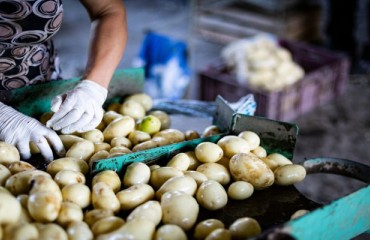
Packers must collaborate with growers to ensure that potatoes are handled gently from harvest to storage and transport. The packhouse can be as high-tech and efficient as possible, but it's too late if the potatoes are mistreated before they arrive. This can be accomplished by packers examining the method by which potatoes are collected from farms as well as the conditions under which they are transported and unloaded at the packhouse.
“Many packers have implemented conditioning stores that can react to a broad temperature range of the arriving crop and prepare it for the packing process, it’s imperative that potatoes are handled at the correct temperature and 1 or 2 degrees can make all the difference to pack out yield,” Hill added.
Packers used to run more lines for shorter periods; often, packing machines would be left set up with a film to do a repeat stock-keeping unit (SKU) the next day, leaving lines idle once an order was completed on a given day. When labor was less expensive and personnel could be transferred from one line to another, this wasn't such a problem.
These days, the packers use highly efficient weighers paired with vertical form-fill machines that enable quick film changes, often feeding a packing robot. This kit is integrated to work in harmony so that the entire line can drive efficiency, which is measured in packs/bags per minute.
You can read the rest of this article in your complimentary e-copy of Issue 1 of Potato Business Dossier 2022, which you can access by clicking here.