Frito-Lay Bets on Machine Learning
In a recent talk, Sharmeer Mirza, senior research and development engineer at PepsiCo, revealed how artificial intelligence and its machine learning applications are used to improve potato chip production operations at Frito-Lay.
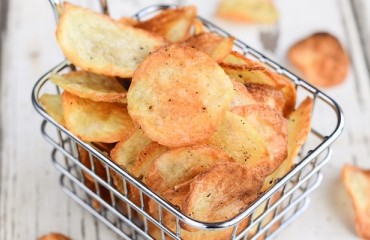
Mirza said that one of his first projects at PepsiCo involved building systems that could sense the texture of chips without destroying them. To achieve this, he developed a system that hits chips with laser, listens to the sound coming off them, and then uses that data to correlate the sound into texture. According to Mirza, this system could provide an automated quality check for chip processing systems.
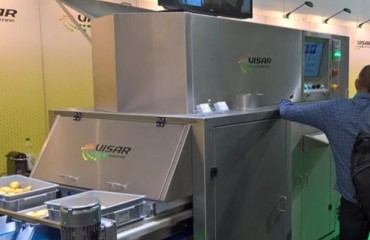
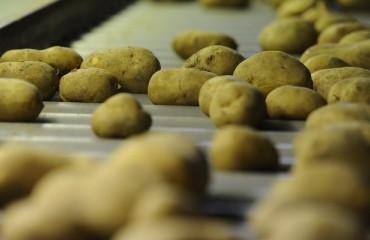
This experience inspired Mirza to develop a machine learning model for use with a vision system to calculate the weight of potatoes that are being processes. One of the company’s Frito-Lay sites used a vision system to gather data on the size and number of potatoes being processed. The facility also employed weighing elements on conveyors to weigh all the potatoes in production.
Mirza also came up with the idea to build a model that can analyze the images of potatoes to predict the weight of potatoes. This machine learning-imbued system would allow to conduct a mass flow estimation of the potatoes moving through the processing system using only the visual information captured by the cameras. Mirza explained that using the mass flow estimator could bring considerable savings, given that Frito-Lay’s has 35 potato chip line in the US alone.
Moreover, Mirza is also working on various other projects. One involves a vision system that looks at very potato passing though the peeling process. He wrote an algorithm that can determine how well-peeled a potato is after going through the process, versus how unpeeled it is. The information can be used to optimize peeling operations in order to avoid over-peeling the potato.
Looking towards the future, PepsiCo will continue to focus on machine learning. To this end, the company will have Mirza teach an internal course with his R&D associates on advanced machine learning and computer vision.