Exclusive: Freezing - Savings Are Required in All Areas
Nowadays, an increasing number of cooling and refrigeration systems, including those used in potato processing, are working according to the heat recovery principle, so that the energy received from refrigeration can be used efficiently elsewhere.
By Dan Orehov
There are a lot of freezers available, on the market today, from tunnel freezers, to spiral freezers, impingement freezers, carton freezers, or spiral immersion systems. However, the accent falls on energy efficiency and re-use, in order for the production line to be as sustainable and cost-efficient as possible, regardless of the equipment type. But it is not only sophisticated and energy-saving technology that helps to save money. Designs on the drawing boards already reveal savings potentials, in which developers direct their attention to simple maintenance and implementation of hygiene regulations.
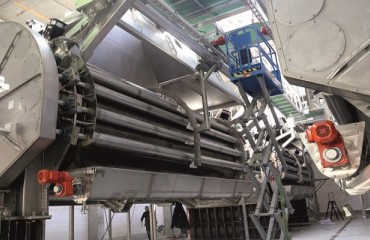
Freezers from GEA, for example, are designed such that cleaning is up to 40% faster than with other types. Some reasons for this time saving are the smooth surfaces that are easy to clean, as well as the stainless-steel structures, without joints and with welded connections throughout, where dirt hardly has a chance to collect. This involves the entire enclosure, including unit floor, as well as the inner structure. In addition, the floor of the unit is sloped, and all structures are elevated on welded studs, so that liquids can run off without difficulty.
Putting French Fries to the Test
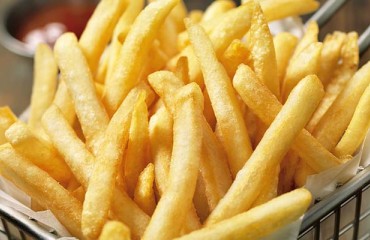
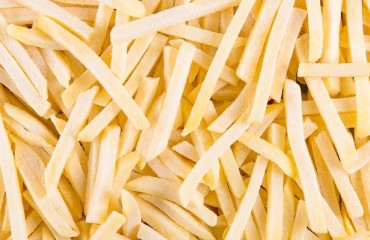
GEA has recently concluded tests proving the effectiveness of its award-winning Callifreeze® system, which improves product quality and provides energy savings by automatically controlling and monitoring the condition of frozen products as they exit the freezer. Because Callifreeze® uses Aquantis sensors, frozen food processors can ensure accurate product quality control and avoid product wastage. The system calibrates freezer parameters through the continuous measurement of a product’s level of frozenness (LOF). This allows retention time, air temperature and fan speed to be controlled so that the required and precise level of freezing can be achieved with minimum energy consumption. The Callifreeze® tests, which took place in January 2019 at Bergia Frites, a market-leading French fry manufacturer in Roermond, the Netherlands, were performed on 7mm x 7mm shoestring, 9mm x 9mm straight-cut and 13mm x 13mm crinkle-cut fries.
The results prove that savings can be achieved when freezing French fries by increasing the evaporating temperature and via the continuous monitoring and control of the LOF conditions according to quality targets. The Callifreeze® system was installed at the exit of the GEA IQF tunnel freezer to continuously monitor the LOF. The technology was able to measure the percentage of frozen water in an 80 to 120mm product layer conveyed from the freezer to the packing area. The evaporating temperature of the CO2 refrigeration installation was controlled according to optimized settings defined by the system. The results show that crinkle-cut fries are sufficiently frozen when the evaporation temperature is increased by 30C (-330C to -300C) with the original retention time. For 7mm x 7mm straight-cut fries, then the evaporation temperature could be increased by 50C, which represents a 15% energy savings in refrigeration supply, without a reduction in LOF.
To read the complete article, please refer to the May-June 2019 issue of Potato Processing International.