Bioplastics production is Anticipated to Triple to 6.3m Tons by 2027
Bioplastics production is presently 2.4m tonnes worldwide. However, according to Constance Ißbrücker of European Bioplastics, this figure is anticipated to triple to 6.9m tons by 2027.
Agriculture, which currently accounts for 4% of total production but is anticipated to increase to 5%, is one of the applications expected to grow the most.
Theodora Nikolakopoulou, a European Commission official, emphasized Europe's concern for farmland protection, stating that all controlled-action fertilizers sold in Europe must be biodegradable by July 2026. Elena Domínguez, an agricultural researcher at AIMPLAS and the seminar's technical coordinator, described how AIMPLAS advises the European Commission on the criteria that these types of applications must satisfy to be classified as biodegradable products.
Asobiocom's Jordi Simón described compostable applications and emphasized the significance of limiting their use to applications where bioplastics add value, keep product functionality, and provide end-of-life benefits by improving sustainability and lowering environmental impact.
Johana Andrade, a researcher at the AIMPLAS Biodegradability and Composting Laboratory and the Seminar's technical supervisor, moderated the second block, which focused on standards and certifications. To ensure that bioplastics are used properly, that their end of life is managed properly, and that the anticipated environmental benefits are realized, Andrade discussed the significance of standardizations and certifications when promoting the benefits of bioplastics. Positive outcomes of compostable plastics were presented at the roundtable discussion in actual composting situations at industrial facilities, where it was confirmed that full biodegradation occurred and that high-quality compost was produced with a decrease in unidentified garbage.
Stories of Innovation and Achievement
At the conference, businesses from every link in the value chain showcased their innovative materials and goods. Participants learned first-hand about a wide range of topics, including additives that enhance the compatibility and processability of biopolymers as well as recovered PLA water jugs with comparable qualities to virgin materials. They even saw bioplastic pyrotechnic devices for air displays produced by blow-film extrusion, as well as a wide variety of compostable bottles, closures, and containers that can be processed using standard equipment and have similar properties to conventional plastics.
AIMPLAS also showcased the outcomes of some of its projects for the packaging sector, including 3D food printing cartridges, the plastic film made from coffee waste, biodegradable barrier packaging made from food waste, and active packaging to prolong the shelf life of cheese. AIMPLAS offered natural paints to contain citrus mealybug infestations in the field, foams for hydroponic crops made from waste from the poultry industry, and a compostable cardboard-like product made from the trimming and pressing waste from vine crops as solutions for the farming sector.
The seminar came to a close with a session on the environmental effect of bioplastics in open environments from the viewpoint of farmland and the marine environment, which was part of the second day's success stories-focused sessions.
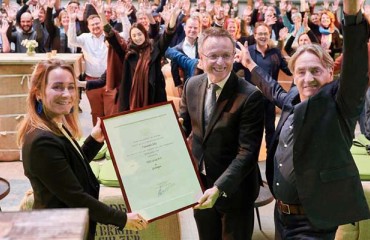
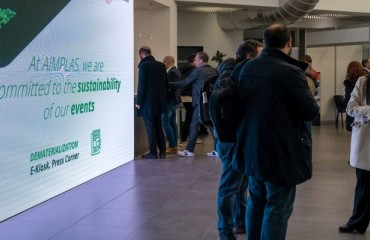
The eighth edition of the International Seminar on Biopolymers and Sustainable Composites was recently launched by AIMPLAS, the Plastics Technology Centre. Nearly 20 speakers presented their innovations and success stories while discussing the difficulties and opportunities facing the bioplastics industry.