USDA: Overview of Canada's Current State of its Potato Industry
Canadian imports of U.S. potatoes have dropped significantly and existing Ministerial Exemptions have been cancelled due to COVID-19 impacts. Processing potato acres are forecast to be reduced 15 to 25% while fresh potato acreage is expected to be flat. Prince Edward Island (PEI) will provide funds to help the island’s potato industry weather COVID-19.
In a recently published analysis, the USDA looks at the potential consequences of the COVID-19 pandemic on the Canadian potato sector. The local authorities have taken a series of steps to help out those affected. As such, the Prince Edward Island (PEI) recently announced it will provide CDN4.7m (USD3.5m) to address the Island's potato surplus as a result of COVID-19 market conditions. The funds will be used to help producers and processors with the cost of shipping and storing potatoes.
"This will help to ensure no product is lost so that farmers are in good position for the 2020 growing season," says PEI minister of agriculture Bloyce Thompson. Additional agricultural support was offered to farmers in the form of business risk management and expanded insurance programs but provincial officials also stated they are looking for the federal government to do more.
In March 2020, Canada saw an erosion of food service demand as restaurants closed or reduced operations due to government imposed stay-at-home measures but demand for retail potato products, particularly fresh table potatoes, actually increased. The impact of COVID-19 on the industry is still being analyzed, but the 2020/21 acreage is expected to remain stable. However, based on reports of decreased seed acres, decreased contract processing acres, and stagnant fresh acres it seems likely overall acreage may decrease unless growers are willing to risk planting a number of open acres in the hopes that impacts from COVID-19 will not carry in to the 2020/21 crop year.
Workforce
The availability of temporary foreign workers (TFWs) may also have an impact on the Canadian harvest. Canadian industry and government officials have been working on the logistical challenges of bringing TFWs into Canada during a pandemic. It is expected 9,000 TFW will be in country by the end of April 2020, 4,000 fewer than would be present during a typical year. TFWs are less of an issue for the potato sector at this time of year due to the mechanization of planting; they are needed by the seed sector but in smaller numbers compared to other horticulture commodities. Having access to TFWs will be more important later in 2020 once potato harvest begins; industry is expecting they will have the required number of workers at this time.
Acreage
Despite a 4% increase in area planted in 2019/20, driven by an expansion of processing capacity particularly in Manitoba and Alberta, the expanded acreage was estimated to be 10,000 acres short of processing needs. Also, harvest issues in Western Canada led to the loss of 20,000 acres of processing potatoes from the 2019/20 crop. This shortfall resulted in increased import activity of U.S. processing potatoes to supplement the Canadian crop through February 2020. From October to February, imports were up 26% compared to the five-year average. Industry sources anticipated imports would continue, as available, to supplement Canadian stocks until the 2020/21 harvest began to supply field orders to processors. However, following the demand loss in foods service as a result of the COVID-19 pandemic in mid-March, sources now report imports of U.S. potatoes have virtually ceased and existing Ministerial Exemptions, which permit imports outside of Canada’s bulk restrictions, have been cancelled.
Prior to the pandemic, provincial boards had met in early March 2020 and expected processing potato acres to increase by 13,000 acres to fulfill capacity expansion. The current expectation is contracted processing acres will now be 15 to 25% lower than the 2019/20 crop. With the loss of food service demand storage stocks of Canadian processing potatoes are considered to be more than sufficient to meet processor demand until the 2020/21 crop becomes available. Supplemental imports of U.S. potatoes are expected to be minimal for the remainder of the 2019/20 crop year. Individual growers will determine how many open acres of processing potatoes they intend to plant for 2020/21 but many provincial boards are advising growers to limit this acreage due to limited demand for these potatoes. Approximately 80% of processing potatoes in Canada are destined for food service.
While some processors have increased their output of retail ready frozen product there is not enough demand shift to absorb all of the processing potatoes remaining in storage. To date processors have indicated they will use the 2019/20 contracted potatoes in storage but if growers are able to move potatoes to another outlet they are encouraged to do so. Use of contracted potatoes will be delayed (ex- all April potatoes may not be processed in April) as processors reduce capacity to increase physical distancing in plants and to manage frozen stocks. There were already some harvest issues related to weather impacting some storage and losses this year as potatoes are held in storage longer than intended are expected to increase.
Fresh Potatoes
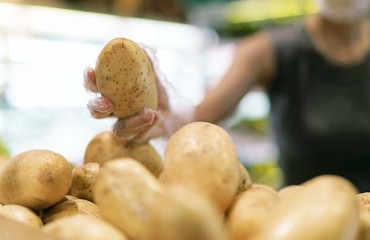
On fresh table varieties, sources indicate acreage is anticipated to be similar to 2019/20. Retail demand for fresh potatoes increased in the second half of March 2020 as a result of consumers stocking up on food staples with fresh sales increased 42% across a reported 10-day period. This demand surge had waned by the start of April 2020, although overall demand is expected to remain at normal pre-COVID-19 levels and prices are expected to be favorable through 2020.
Sources reported there has been a change in retail distribution logistics as retailers see changes in consumer shopping patterns in response to COVID-19 restrictions and non-essential business closures. Many retailers had placed additional orders following the surge in purchases in mid-March 2020 but some are now cancelling orders in order to manage inventory stocks and retail floor space.
There was a plan to try to move some processing potatoes into the fresh sector as an outlet but this is no longer expected to be a widespread, viable option since fresh demand is returning to normal levels and storage issues are causing some coloration problems that will not be desirable to consumers.
Chipping Potatoes
Industry reports the demand for chipping potatoes has increased. Chipping potatoes were largely unaffected by the harvest issues that impacted processing acres in 2019. Potato chip producers are limiting production to the most popular flavors in order to increase output to meet increased retail demand.
Seed potato acres are expected to decrease for the 2020/21 crop as a result of losses anticipated for this spring, with provincial boards expect to lose smaller growers and growers who have less of a financial buffer in place. With expectations of reductions in processing acres and demand losses, some seed growers are seeing seed contracts for this season being cancelled. In some instances, delivered seed is being refused or returned. Estimates of seed acre losses have not been indicated by industry at this point.
Trade
In the first two months of 2020, Canadian trade activity for potatoes increased. Import activity showed a 77% growth compared to the five-year average. Export activity was up year over year compared to 2019 but down 2% on the five-year average. This was driven primarily by a decline in fresh potato exports. Seed potato exports were up 6% compared to the five-year average. Industry sources had reported increased truckloads of seed potatoes to the United States prior to mid-March as U.S. growers were reportedly concerned about potential disruptions related to COVID-19 with planting being earlier than in Canada. However, industry now reports limited import activity expectations for the remainder of the 2019/20 crop year and estimates export demand for Canadian potatoes has decreased by at least 50%. Particularly, as U.S. processing potatoes face similar challenges with demand losses due to decreased food service activities, Canadian industry has reported export volumes to the Eastern United States being displaced by U.S. potatoes being redistributed.