The Global Potato Starch Market is Growing
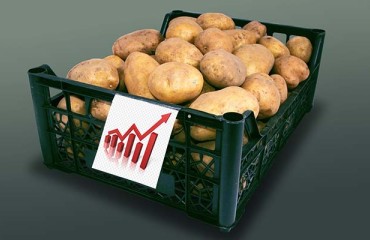
Recent estimates show that the global potato starch market will reach a value of USD 4.3bn in 2022. Moreover, it is projected to reach USD 5.2bn by 2027, recording a CAGR of 3.7% during the forecast period.
“Asia Pacific is projected to witness the growth of 4.73% during the forecast period. The potato starch market in the Asia Pacific is growing at a CAGR of 4.6% due to the rising demand in large economies, such as China, India, Japan, and other Southeast Asian countries,” Reportlinker press release shows.
The industrial organization and technology of starch processing are changing rapidly in the Asia Pacific, the above-mentioned source experts added. Unlike other regions where starch is processed almost entirely by large companies, in the Asia Pacific, starch processing is done by small and medium-sized firms.
“Historically, native starch has been largely used for food products in the Asia Pacific region. The industrial applications and technologies involved in starch processing are changing rapidly in the Asia Pacific countries. Potato starch is increasingly being demanded by various industries in the region and these industries are incorporating modified potato starches in their manufacturing processes and products,” the report also mentions.
According to the document, conventional potato starch dominates the market with 83.4% of the total market share in terms of value.
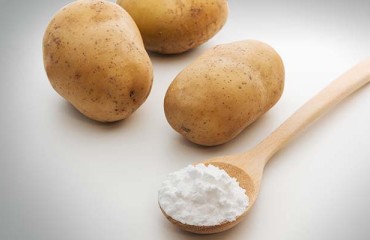
Starch is a polymeric carbohydrate that consists of a large number of glucose units. Potato starch has larger (oval and spherical) starch granules than the other major starches. It starts to bind water at a lower temperature compared to other starches and helps normalize blood sugar. A scientific study published in the journal of Diabetic Medicine in 2010 investigated whether or not the consumption of resistant starch could help people struggling with metabolic syndrome. However, potato starch does not contain significant amounts of vitamins or minerals. In terms of essential nutrients, it only contains one essential nutrient, which is carbohydrates.
Modified starches are used to remove the constraints of food applications. In food, modified starches aim to remove the constraints of food applications (for example, in cooking, freezing/thawing, canning, or sterilization) and make the ingredients compatible with modern food processing. Modified starches are used, for example in food products that need to be microwaved, freeze-dried, cooked at high temperatures, or baked and fried so that the texture of such foods does not change during the cooking process.
Modified potato starches are used in chips, canned soups, cheese sauces, powder-coated foods (cocoa-dusted almonds), and candies. Starch is a binder used especially for sauces or soups, but it is not stable and releases water after long storage in the fridge.
The common objective of most of these transformations is to limit the natural tendency of the starch to remove the water. During the cooking of soup, for example, the native starch is hydrated in contact with water. The starch granules expand and the viscosity of the solution increases, giving it a particular texture.