Frito-Lay Grows Despite COVID and Supply Disruptions
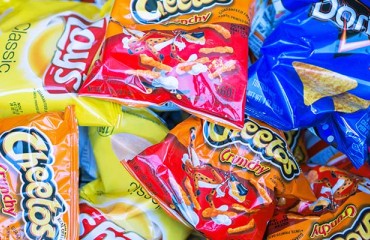
Frito-Lay earnings and sales rose as both the company’s North American beverage and snacks businesses performed well during the period, according to a recent press release. “We are pleased with our results for the first quarter as we successfully overcame challenges related to difficult year-over-year comparisons, uneven recoveries across many of our international markets and weather-related business disruptions in the US,” said Ramon Laguarta, chairman and chief executive officer.
Net income for the quarter ended March 20 was USD1.7bn, equal to USD1.24 per share on the common stock, and an improvement over the same period of the previous year when the company earned USD1.3bn, equal to 96¢ per share.
Sales for the quarter were USD14.8bn, up from USD13.9bn the year before.
Both Frito-Lay North America and PepsiCo Beverages North America (PBNA) performed well during the quarter, generating USD1.2bn and USD366m, respectively, in operating profit. Frito-Lay sales were USD4.2bn, up from USD4.1bn the year before, and PBNA sales exceeded USD5bn, up from USD4.8bn.
Frito-Lay’s share performance has accelerated in the last six months, most notably in the last three months, Laguarta said.
“It's the fact that we're seeing more and more small-portion consumption in the snacks business and, to a certain extent, also in the beverage business,” he said. “So smaller units, especially now in the form of multi-packs, given there is an increase in home consumption, that's the consumer package that is growing the fastest. And I think that the team has been very good at providing more personalization around that, creating more combination of multipacks, which drives eventually — given that consumers like variety, it drives performance.”
Frito-Lay North America is based in Texas and the severe weather and subsequent power outages that affected much of the region impacted the business unit.
“Frito was particularly impacted by the winter storm because we have a lot of infrastructure in the south,” Laguarta said. “A lot of our manufacturing and depots are there in the south. So, it was particularly impacted. We're slowly recovering from that situation, both raw materials and actual manufacturing, and we’re very close to having a normal supply chain now.”
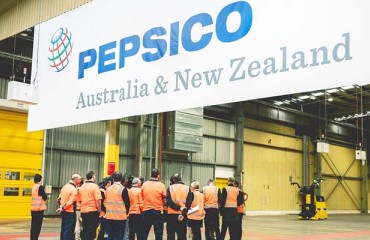
Outside of North America, PepsiCo sales fell slightly in Europe and Latin America, but rose in Africa, Middle East and South Asia as well as Asia Pacific, Australia, New Zealand and China.