Washington to Pass Strong Farmworker Overtime Laws
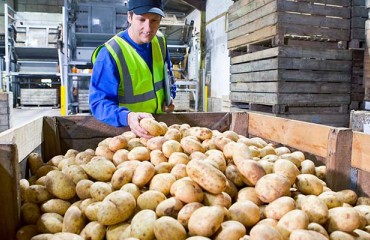
Legislators in Washington state are on the cusp of passing one of the country’s strongest farmworker overtime proposals into law—a move that worker advocates consider a major step toward addressing labor protection gaps in agriculture.
Recently, the state house voted to pass the legislation, referred to as Senate Bill 5172, which would require employers to pay farm workers time-and-a-half for all labor performed over 40 hours per week. This threshold would be phased in gradually: Employers will have to pay overtime for hours worked over 55 hours per week starting in 2022, then for those over 48 hours per week come 2023, achieving full worker parity by 2024. This would make Washington the first state to fully close overtime exclusions for farm workers.
The bill defines “agricultural employee” as anyone who works in the harvesting, packaging, and transportation of agricultural commodities. It also includes commercial food processing workers, and those who harvest and process oysters. State law currently exempts farm workers from overtime protections, as do federal labor laws.
“This is 60 years in the making,” said Edgar Franks, political director at Familias Unidas por La Justicia, a farmworker union involved in the bill’s development. He referenced the state’s first minimum wage law, which took effect in 1959. “To have it passed right now, here in Washington state, it’s a big step to farmworker justice.”
Although five other states have laws on the books that mandate some kind of overtime compensation for farm workers, most come with significant caveats. For example, in New York and Maryland, workers are eligible for overtime only for work in excess of 60 hours per week. In California, a 40-hour per week threshold is gradually getting phased in, though it won’t fully take effect for all employers until 2025. In Hawaii, farm workers are eligible for overtime at the 40-hour mark, but the state has what is called a “seasonality provision,” which allows employers, for almost half the year, to opt out of paying overtime until workers reach a 48-hour threshold.
The Washington Farm Bureau has said that it will pursue a carveout similar to Hawaii’s in the next legislative session.
“This bill presents a significant change to the state’s wage-and-hour laws and there’s no doubt that some farms will not survive the higher costs of labor that will result,” said Breanne Elsey, associate director of government relations for the group.