Trying out Various Regenerative Techniques When Growing Potatoes
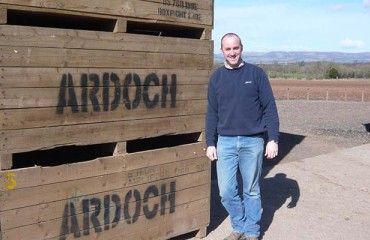
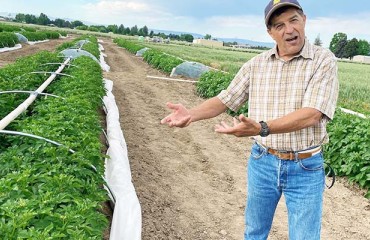
Farmer Willie Officer in Montrose, Colorado, has observed the outcomes of a modified approach to some on-farm methods to see the potato yields (among others) increase and input prices decrease five years after hosting the Farming For A Better Climate (FFBC)'s pilot project.
Willie got involved with the project, run by SAC Consulting, to experiment with different regenerative methods, from floatation tires to solar energy, to see how they would improve the soil, crop quality, and profit margins. Willie farms 900 acres of all arable land, including potatoes and daffodil bulbs, over a mix of owned, rented, and contracted land.
“We’ve always been proactive at Ardoch of Gallery with trials and seeing how we can progress the farm. We are a traditional Angus family farm, so we need to be constantly looking at ways to make the business more profitable. I was curious about this more regenerative approach, both for improving the business now but as much, especially as my children grow up and my son is showing aspirations to take over, for the next generation. We took livestock out of the rotation when we had to sell the cattle during the BSE years, and I wanted to see if there were other ways we could be doing a better job to boost the soil and wider environment,” Officer explained.
The farm uses a lot of electricity to run refrigerated storage for bulbs in the summer and potatoes in the winter. The Officers looked at various green options through the FFBC program and determined that solar panels were the best match for their system. Willie claims that since 2017, these have outperformed the forecasted results, aided by a few successful summers, which has been greatly appreciated given the recent rise in energy prices. During the winter, there is still some dependence on the main power, but during the summer, the demand is mainly met by solar panels. Wind generators were another option that was explored, but SSE informed them that it was unable to add the electricity from the farm to the system.
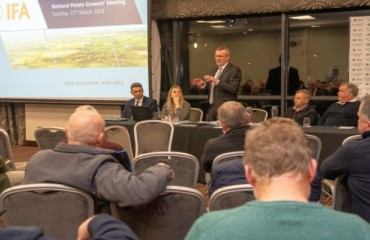
The three-year initiative (2015–18) placed a lot of emphasis on the soil, and Willie has noticed major advancements in this area. Speaking to the gathering of farmers assembled around the FFBC initiative was Aidan Monaghan of SOYL. We can now provide the produce with the right nutrients by using more thorough soil sampling, satellite images, and a fertilizer spreader with variable rate capacity. The GPS mapping on the combine, according to Willie, shows that his harvest is much more evenly distributed even though he may not have decreased his inputs.
Willie installed flotation tires and put the combine on tracks after observing the soil's compaction while excavating soil trenches at the beginning of the job. This improved the root structure and harvests.
“The sure sign is you can’t see any wheel tracks from the previous rotation. Not everything we tried worked, though. Cover crops weren’t great, but the understanding around these has moved on so much since we looked at it – the different mixes for particular soils, the circumstances they’re grown in, and the Scottish climate. We’d look at it again as it would work well with an early harvest of bulbs,” Officer added.
In place of cattle, Willie has a straw-for-dung deal with a neighbor that he wished to start. As a result, there are now more worms, insects, and other creatures on the earth. He sowed wildflower headlands on his property using seed that was made more affordable by selling potatoes to Asda/IPL, and he calls the fauna "phenomenal." Although strip-tilling is not presently feasible, he min-tills some acreage.
To generate a variety of revenue, the family established a haulage business. Battery storage and a second solar setup are planned for the future, but Willie is waiting for technology to catch up.
According to David Ross of SAC Consulting, this procedure has increased the farmers' awareness of what can be done to make gradual adjustments to sustain their farms in the future.
“Many of the measures we explored with Willie did not bring an instantaneous return, but it’s great to see, five years after the end of the project, how he continues to review processes to make marginal gains that are consistently pushing yields and the business on,” Ross concluded.