Exploring Sustainable Management Strategies for the Potato Early Die Complex
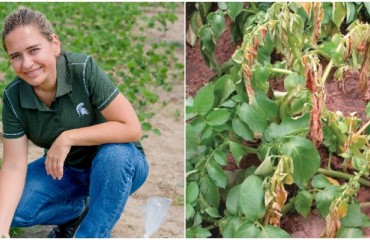
The National Institute of Food and Agriculture (NIFA) of the U.S. Department of Agriculture (USDA) has awarded a team of researchers from Michigan State University (MU) a USD750,000 grant to explore sustainable management strategies for the potato early die complex.
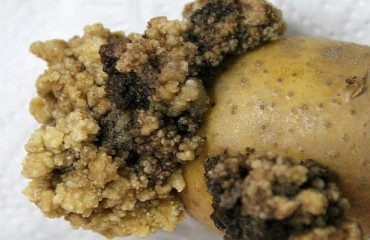
Potato farmers face a wide range of difficulties. Potato early die complex, one of the most devastating diseases can cause yields to drop by as much as 50%. It is brought on by the interaction of the worm Pratylenchus penetrans and the fungus Verticillium dahliae, which affects the health of the plant before it can mature. Other pathogens may also affect the disease, according to earlier studies on the condition.
In a recent study by Willbur of Michigan potato growers, 45% cited potato early die complex as one of their top three disease concerns, and 42% reported that current management measures needed to be improved.
Fumigation, which is now the most popular therapy, has detrimental impacts on the soil microbiota and can lessen the effectiveness of biological controls.
“Our previous research has concluded that poultry manure and a compost blend are effective at reducing P. penetrans populations and improving potato yield. The pesticidal effect of these products is not fully understood, but the literature suggests that it is attributed to a combination of mechanisms, including the activity of microbial communities that reside in these amendments,” said Marisol Quintanilla, a nematologist and assistant professor in the MSU Department of Entomology, whose position is supported in part by MSU AgBioResearch.
The ability of soil amendments to fight illness is receiving more attention than their traditional role in enhancing the health, structure, and quality of the soil. MPIC and Project GREEEN, a partnership between MSU, the Michigan Department of Agriculture and Rural Development, and plant agriculture commodity organizations, provided funding for a large portion of the exploratory research.
The new project's objective is to offer information on a compost mixture that possesses the needed antibacterial properties to combat potato early die complex. Both the outdoors and the lab will be used for research. Two trials, one of which will be reproduced in North Dakota, will be conducted at a farm in southwest Michigan with a history of the potato early die complex. A potato management manual and other online and printed extension resources will be produced. The manual will be offered in both English and Spanish.
“Growers will be heavily involved in the process because this research is geared toward meeting their needs. We want to make sure the resources we generate are accessible to as many growers as possible,” Quintanilla concluded.
Michigan ranks ninth in potato production in the country, with about 18,600 hectares and 771,100 tons harvested per year. The Michigan Potato Industry Commission (MPIC) estimates that the industry provides USD1.24bn to the state's economy. Michigan is also the nation's leader in potato chip production.