Belgapom Reveals Position on the Method for Storing the 2020 Harvest

As a result of the decision taken by the European Commission, the maximum residue limit (MRL) for the active substance CIPC (chlorpropham) will be 0.01ppm (detection limit) unless the Standing Committee of Plants, Animals, Food and Feed (SCoPAFF) decides otherwise, noted Belgapom in a recent statement.
Since sprout inhibitors based on the active substance CIPC have been widely used in European storage sheds in the past decade, there is a risk of cross-contamination for potatoes, that, starting from the coming harvest year (2020) will be kept in storage sheds with a CIPC past. It is for this reason that the European potato sector has submitted a request to the authorities for a temporary increased MRL (t-MRL) for the active substance chlorpropham.
The dossier for the t-MRL has been submitted by the Dutch CTGB and is currently being assessed by the European Food Safety Authority (EFSA). However, regardless of any t-MRL being awarded, the European Commission expects the European potato sector to make a maximum effort to thoroughly clean storage sheds with a chlorpropham past.
With an eye to this legal situation, Belgapom has, therefore, stated the following:
- As of the harvest of 2020, potatoes may not be treated with products based on the active substance CIPC and potatoes must comply with the applicable legislation;
- Concerning potatoes that will be stored in storage sheds for export, these potatoes must come from storage that is suitable for potatoes for human consumption where CIPC has never previously been used or which has been cleaned to prevent cross-contamination with the products based on CIPC used in the past;
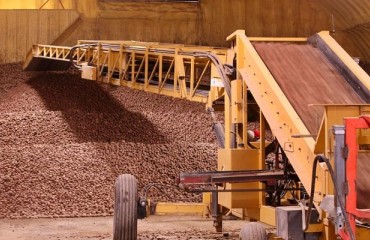
- Sellers of potatoes that will be stored in storage sheds where CIPC was used in the past, will, as part of good practice, make a maximum effort to sufficiently thoroughly clean the storage sheds including any installations such as ventilation, air ducts, conveyor belts, and crates, etc, before storing the 2020 harvest.
- Sellers of potatoes that will be stored have an obligation, at the time of delivery at the latest, to provide information buyers about the efforts made with regard to thorough cleaning.