Handling Large Potato Quantities From the Storage to the Packaging Line
Most people consider potatoes to be a heavy, perishable good that requires expensive transportation. Moving potatoes from the storage line to the packaging line requires handling large quantities of goods each year. Improved handling techniques are of interest to operators of packing houses and potato storage facilities because they can help them reduce costs by making efficient use of labor, facilities, and equipment.
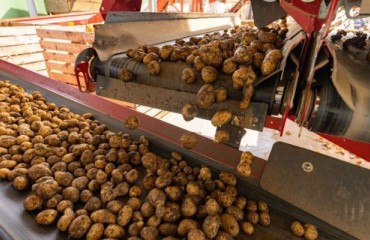
“Some of the methods available for handling table stock potatoes from the storage to the packing line are conveying, powered bulk scooping (with powered bulk scoopers/bucket loaders), conveyor scooping/in-trench conveying, and potato fluming,” USDA’s ‘Handling potatoes from storage to packing line’ Marketing Research Report authors wrote.
Conveying Potatoes Into Storage - The initial step in handling potatoes in storage is operating a bin loader to move potatoes from bulk trucks to the storage pile.
“A bin loader that will allow for efficient operation and reduce bruises should have an easily adjustable hopper height to keep the drop of potatoes from the truck to a minimum, a hopper with sufficient capacity to prevent spilling, a short draper chain conveyor between the hopper and the boom conveyor to allow dirt to sift through,” the conveying experts from Agriculture Canada described.
In addition, it should have a reel for storing extra cords, enough boom conveyor length (roughly twice the height of the pile), a wide swing range for the boom conveyor, and provisions for connecting convenient electrical outlets for the operator. It should also never operate at an inclined angle higher than 45 degrees.
“Careful operation of the bin loader can prevent excessive damage and give higher returns to the grower. To reduce damage when using a bin loader, the storage owner should assign one man to operate the bin loader and supervise the unloading operation, should use a progressive bin filling procedure to prevent rolling, use straw-filled bags or baffle boards to prevent potatoes from rolling to the floor under the bin loader. This will greatly reduce floor crushing and speed the moving operation,” the document also reveals.
Lastly, but just as importantly, the owner of the storage should make sure that all chain conveyors are rubberized, keep all drops to a maximum of eight inches, pad any metal sides or sharp edges, and have a sorter work next to the hopper to remove any stones or sick potatoes harvested from the field.
You can read the rest of this article in your complimentary e-copy of Issue 4 of Potato Business Digital 2023 magazine, which you can access by clicking here.