Exclusive: Increasing Flexibility with VFFS Systems
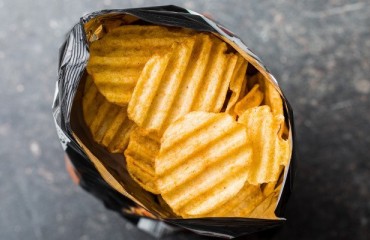
There are a number of different packaging systems used in the processed potato category. In the potato chip segment, VFFS (vertical, form, fill and seal) technology dominates as it offers both the speed and the flexibility to pack products in various bag formats and sizes.
There has been quite a bit of progress in packaging equipment design for potato chips over the last few years, in particular when it comes to sustainability. A lot of packaging manufacturers have started increasing their environmental credentials and are now supplying environmentally-friendly systems, according to the companies contacted for this article. Intelligent controls technology can also help towards a more efficient and sustainable production process. By collecting and evaluating data from the entire production line, it provides manufacturers with immediate and accurate information that can improve processes, lower costs, simplify logistics and inventory operation. Once a control system has been installed, it can also provide operators with detailed energy reports, giving them the visibility they need to ensure energy is only used when and where it is needed.
All about VFFS
Flexibility is definitely a key requirement for a lot of food processors. The more flexible the system, the less time is required to change production runs to accommodate different pack sizes or formats, resulting in minimum interruption to the production flow. For VFFS technology this would mean that there are no mechanical adjustments needed when changing product or film, quick former changes and a wide variety of jaw size configurations that enable full flexibility of bag size and format, film type and application on a single packaging system. That way, manufacturers are able to respond to consumer trends quickly and efficiently without having to make costly and time-consuming changes to their production setup.
According to equipment specialist tna, in addition, a hygienically designed packaging system is one of the best ways to optimize food safety and quality. VFFS systems are a popular choice as they are designed to leverage the benefits of gravity to transport products and their sloping surfaces make it is easier to prevent food residues from accumulating on the equipment. Easier access to machine parts further simplifies cleaning procedures. Ideally, cleaning should be possible without removing components; but if components need to be removed, it should have a tool-less design with no loose parts. In addition, crevices, corners and other areas where food can build up are open invitations to cross contamination. The packaging system design should therefore be free of features that create recesses, gaps and areas that are typically hard to clean.
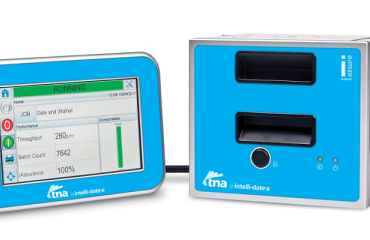
“We recently launched the new tna robag 5, the industry’s first ultra-high speed VFFS system for potato chips. It was specifically designed to deliver ultra-high packaging speeds and has been equipped with a range of new innovative features. This includes the tna intelli-weigh 0220 omega, an ultra-high precision scale, which is capable of combining different products, while offering fast and accurate product transfer with minimum waste. In addition, the integration of ultrasonic back seal technology allowed us to overcome the thermal transfer limitations of traditional heat seal methods and provide superior seal integrity even at high speeds. The tna robag 5 is also equipped with the latest controls technology, including a new real-time CXE controller that reduces maintenance costs and downtime by supplying manufacturers with instant, highly detailed system diagnostics,” says Shayne De la Force, chief marketing officer, tna. “We also introduced the new tna intelli-date 5, a high-speed thermal transfer overprint (TTO) date coder with airless design and integrated print code verification technology for continuously high-quality printing on flexible bags. Part of tna’s performance 5.0 ultra-high speed production concept, the new tna intelli-date 5 features an ultra-fast printhead movement that is able to increase throughput by up to 25% compared to previous models. Together with its simple, airless design, the new tna intelli-date 5 reduces product waste and costs, providing food manufacturers with the highest equipment reliability and performance at a low total cost of ownership,” he adds.
Mistakes and challenges
Damage to the product is one of the main challenges associated with the packaging process, as equipment manufacturer Ulma points out, adding that different supermarkets have different requirements regarding damage levels. To achieve and test this an ‘electronic potato’ is put through the journey from farm to pack. This can measure damage done to the potato at all points of the process. The majority of the damage happens when the potatoes are dropped from the weigher to the Bagmaker (VFFS), this drop can be up to 2m in height.
“Processors look at the price of machines over what the machine can achieve. If damage is reduced by 80% by purchasing the correct equipment the cost of that equipment should not come into it,” says Steve Brooks, VFFS Business Manager, ULMA Packaging UK. “Ulma has recently introduced the 45 degree, four corner seal machine to the market. This is the first time this has been achieved by any manufacturer. This showed a reduction in damage by over 80%. The company also produced a premium made bag that allows the pack to stand up on the shelf,” he adds.
Another typical mistake, as seen by tna is that a lot of manufacturers still chose to select individual pieces of equipment from different suppliers, which can have an affect on overall line performance. The company says that manufacturers often undervalue the importance of taking a step back and looking at the complete line. For example, a bagger may be able to pack bags of sweets at a rate of 200 bags per minute, but if the scale can only handle 80 weighs per minute, then the overall productivity will be reduced. By specifying completely integrated turnkey systems from one supplier, they can be sure that each component works in perfect synergy with the other, delivering the best results possible.
Positive outlook
According to equipment manufacturers, the market needs to change across all regions, as food freshness is key in a growing population to avoid food shortages. As such, food needs to be packed with minimal damage to help increase shelf life. With the plastic debate in full swing the market needs to change, finding ways to pack more efficiently and to keep product fresher for longer, as the Ulma representative explains.
Last but not least, completely integrated turnkey systems will dominate the market over the coming years as these systems offer many benefits to food manufacturers compared to individual pieces of equipment. Manufacturer tna says that in many ways, the high speeds that are required by today’s food manufacturers are only possible if every single piece of equipment works in complete harmony with the other. Whether it’s a conveyor, packaging system, scale or metal detector, each component needs to be able to communicate with the other to ensure the entire production line operates at maximum efficiency.