Washington's Potato Growers are Fighting for Wider Access to the Japanese Market
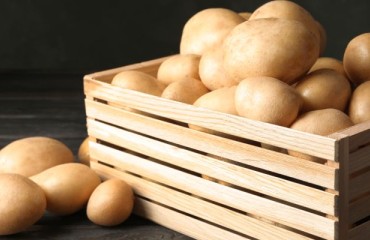
Washington's potato growers are fighting for wider access to the Japanese market that may be worth USD150m. Japan imports fresh potatoes to make potato chips.
As the Biden Administration gets ready to negotiate a bilateral trade agreement with Japan later this year, Sen. Maria Cantwell, D-Wash., spearheaded a letter to U.S. Secretary of Agriculture Tom Vilsack that was signed by the majority of the Washington congressional delegation, according to the Tri-City Herald.
Despite the prevalence of fresh potatoes in the Japanese diet, the market for frozen and processed potatoes is estimated to be worth USD220m in Japan. Potatoes are grown by farmers in Japan as well. According to American farmers, shipping fresh potatoes to Japan might be as profitable as shipping them to Mexico, which allowed the import of fresh American potatoes into its territory last year with a target price of USD150m.
Potatoes produced in the U.S. were in short supply in 2022 as a result of low yields and high costs. There isn't enough to satisfy the existing demand, and it's difficult to expand due to water restrictions and specific potato crop rotation need.
A long-term objective, according to Chris Voigt, executive director of the Washington Potato Commission in Moses Lake, is to expand into new markets. A shortfall one year can become a surplus the next, as was the case in 2020 when the COVID-19 epidemic forced processors to cancel contracts, leaving growers with a “staggering surplus.” According to Voigt, Japan's farmers are among the country's aging population, which is a problem. The contracts that pay U.S. growers a 7% average return to provide potatoes to processors are being replaced by a new market.
More buyers give the seller more negotiating power. The issue is significant for the American potato industry, but Washington will benefit most from the new market due to its geographic location and its access to Seattle and Tacoma as shipping ports. “It gives growers an option,” he said, cited by the same media source.
The potato industry has pushed to open trade with Japan for 30 years. Before U.S. growers can dispatch even one fresh potato, Japan must provide a Pest Risk Assessment to identify pests of concern. With that information, U.S. growers can develop plans to meet hygiene requirements. Japan conducted a similar review in 2006 when it opened the market to potatoes for processing under pressure from its processors. The letter to Vilsack said it proves potatoes can be safely exported.
Due to the chilly, rainy weather that lingered until mid-spring, Voigt claimed that the 2023 growing season is off to a delayed start. He believes that the warmer climate will allow potatoes to catch up. He suggested an extended period of 26.6 to 29.4 degrees Celsius days is excellent.