Private Labels Spread across Europe
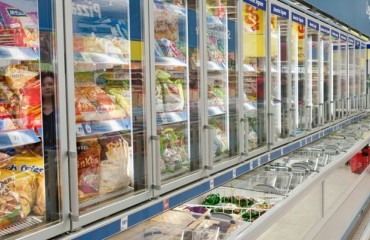
The latest market share data shows clearly that the popularity of private label continues to spread across Europe. Retailer brands now account for at least 30% of all products sold in 15 countries, the greatest number ever, according to Nielsen data compiled for PLMA’s 2014 International Private Label Yearbook.
Three countries—Sweden, Finland and CzechRepublic—crossed the 30% market share line last year for the first time. The number of countries achieving 30% share has been rising steadily. Back in 2011, only 10 countries made it. In 2012, the number climbed to 12.
Of the 20 countries tracked by Nielsen in 2013, 16 posted volume market share gains. The biggest percentage increases were made by Sweden (+5.1 points), Finland (+4.0 points), Poland (+3.1 points) and Slovakia (+2.7 points).
Price Gap with A-Brands Narrows
The price gap between private label and A-brands is narrowing so far this year, according to a new study by IRI. The change comes as the big CPG companies push more promotions in an attempt to stop the market share gains of retailer brands.
Meanwhile, the growing popularity of private label and the expansion of more premium products may be raising the average price of retailer brand products.
In the UK, for example, the study finds that the average price of a basket of retailer’s private label products climbed 3.3% in the first quarter of 2014 compared to the year before period. In contrast, a basket of manufacturer brands increased by only 2.9%. IRI says this pattern can be seen across most national markets. In Spain, for example, retailer brands prices increased by 2.9% while A-brand prices fell 1.9%. “Own-label products are going up in price and at the same time the amount of promotional activity is often being reduced on these products, or not increasing as quickly as it is for brands,” according to IRI.
“Overall we see that the percentage volume of product sold on promotion is increasing year on year. So as retailers are sometimes decreasing the amount of deals on own label, the percentage volume sold on deal is actually increasing, as the national brands increase promotional activity.”
Sainsbury’s launches big promotion
Sainsbury’s is working hard to build its By Sainsbury’s brand, launching the biggest private label ad campaign it has ever run. The retailer’s ‘Try the By Sainsbury’s range’ promotion focuses on comparing private label products with A-brand competitors.
Justin King, CEO, told employees: “Almost all of our customers buy from our By Sainsbury’s range, particularly from our fresh and produce lines. However, in areas where big brands exist, like tomato sauce or detergents, customers are often in such a habit of buying certain brands that they don’t even notice our own brand or they worry the product might not taste as good or work as well.
“So this campaign is all about building trust across the whole range and showing off the quality of these products at great prices. So next time a customer asks you to direct them to a product, why not show them our own brand as well and tell them how good it is!”
The By Sainsbury’s range now has over 7,000 items. The retailer’s private label programme is growing at twice the rate of branded goods and accounts for more than 50% of its food sales.
Prices will drop in Belgium
Supermarket prices are set to fall in Belgium. Nielsen predicts that prices will decline by an average of 5 % in the coming years. Some of the price decline will be caused by the continued growth of discounters in the country. The soft and hard discounters had a combined market share of 43% at the end of 2013, up from 39% in 2009. The arrival of Albert Heijn into the market also may be a factor. The Dutch retailer is using lower prices and promotional activity to build its business in Belgium, PLMA’s report shows.