
HZPC Serves the Russian Seed Market via Alternative Route
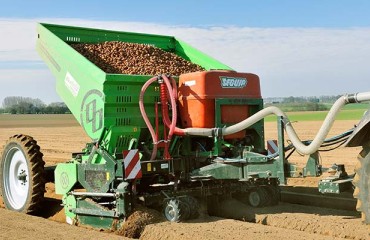
In Russia, HZPC is using an unconventional strategy to secure its potato trade for the future: in 2019, a small breeding company was set up to provide Russian contract growers with pre-basic seed potatoes. In 2020, the production of mini-tubers was added too. These choices were made due to Russia’s aim to be entirely self-supporting within its borders and completely shut out the import of seed potatoes in due course.
Exports to Russia have been difficult since 2014 and things don’t seem to be improving. As well as the drastic reductions of the import of chickens, pigs and cows over the past decades, Russia is also clearly decreasing the import of seed potatoes. The country, however, is nowhere near ready to realize the same quality levels as they do with European seed potatoes. Furthermore, the potato processing industry sets high requirements that are often not met by local products. This means that imports are still tolerated but there is a genuine need to build up expertise and develop quality production processes. HZPC has therefore identified an opportunity to serve the Russian growing market by means of an alternative route.
Quality and volume
According to Pim Bemelmans, managing director of HZPC Sadokas, a subsidiary in St. Petersburg, current demand fluctuates around 6-7 million tons. In addition, the Russian processing industry is expanding with demand for continuity of supply and quality.
“This gives HZPC a chance,” explains Pim. “Russian producers can achieve higher yields by focusing on quality, but this topic is not yet very high on the agenda. Since Russia is a vast country, they are more in terms of quantity. The farm is a huge company covering 2000-3000 hectares with a general manager who lives miles away from the actual growing area. It has enough square meters. It jumps on a tractor. It’s hard to compare with Dutch growers who manage their crops themselves. “
HZPC Sadokas has laid a fairly solid foundation in Russia. Many major contract growers also work with fellow growers from competitors.
“We can’t find a small business that wants to grow in number or focus on quality,” explains Pim. “This, coupled with the increasingly difficult imports of early materials from the Netherlands and Finland, led to the idea of growing prebasis seed potatoes ourselves. In this way, you can lower dependence, but you can also find out if you can actually grow virus-free potatoes here. Every Russian has their own garden, where they grow potatoes every year. This causes a big viral problem in the country. This is because this type of garden is never far away. It poses a big problem for companies. Therefore, outsourcing the cultivation of pre-foundation seed potatoes to companies that focus on quantity rather than quality is too risky. “
Work independently
HZPC has started primary production in Russia in 2019. This growth process was set up as an SBDA project in partnership with HZPC Sadokas, as this is an interim step to secure a future position in Russia’s growth market.
Project leader Gert Jan Feddes said: “We hired a farm, invested in the necessary materials and appointed a grower. MindertPool is a Dutchman who already lives and works in Russia. He is only knowledgeable and familiar with the country. This was great luck, not because he is accustomed to working independently. Russians are very hierarchical and not accustomed to making their own decisions, but they needed someone who could take the initiative when needed. Mindert worked with seasonal workers and from a technical point of view, it is overseen by retired HZPC growers who also advise Russian contract growers.“
HZPC has been successful in growing virus-free potatoes in Russia for the past two years. But not everything went smoothly.
“We found that there were nematodes in the soil, so we are carefully looking for another farm before the new season,” adds Gert Jan. “Understanding the history of Russian soil is a big challenge, but we are doing our best.“