Croatia Sees Major Increase in Potato Imports
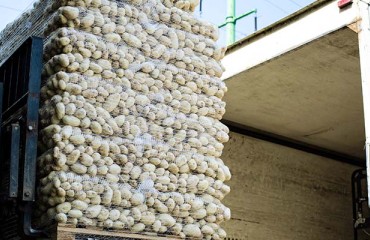
In the first three months of 2020, Croatia imported 16,064 tons of seed, young and ripened potatoes worth EUR8.03m, which is almost half the total value of potato imports in 2019, shows an analysis by the Smarter consultancy company.
For comparison, in 2019 Croatia imported 30,462 tons of potatoes, worth EUR16.68m.
In the first three months of this year, Croatia imported seed potatoes the most – 8,310 tons worth EUR5.33m, which is more than in the entire 2019, when 8,171 tons of seed potatoes were imported, worth EUR6.08m.
At the same time, the country exported 5,033 tons of potatoes, worth EUR1.37m.
“The continuing rise of imports of all kinds of potatoes shows that since the start of the year market surpluses in the EU have partly ended up on our market. The large imports of seed potatoes, of which Croatia lacks sufficient quantities for its own needs, could be an indicator that farm producers, fearing disruptions in the supply chain due to the coronavirus crisis, have resorted to imports so that more potatoes are planted this year,” said the consultancy company specializing in agriculture and food industry.
It notes that there is still no information on the area sown with potatoes or the expected yield. The maximum area sown with potatoes in recent years was 10,310 hectares in 2014, compared to 9,387 hectares last year. Last year’s yield was 173,149 tons, with the self-sufficiency rate being between 80 and 85%. The deficit in Croatia’s potato trade in the first three months was EUR7.54m while in 2019 it was EUR13.5m.
The consultancy company notes that in the coming short-term period, potato growing and consumption in Croatia, whose regions of Istria and Dalmatia have a mild climate suitable for the growing of new potatoes, will depend on the application of modern production and processing technologies, expansion of product lines, producer networking, establishment of appropriate market infrastructure and marketing activities.
The consultancy company also believes that it is necessary to consolidate farmland and increase yield per hectare as well as give potato the status of a special vegetable to create possibilities to apply for EU funding for the purchase of new machines and the construction of modern storage facilities.