US-Japan Agreement Needs to Discuss Tariffs and Phytosanitary Measures
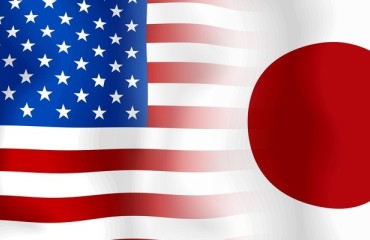
The American National Potato Council (NPC) provided guidance to the Office of the Trade Representative (USTR) on enhancements for potato exports in a future U.S. - Japan Free Trade Agreement. Japan is the largest export market for the U.S. potato industry.
The NPC welcomed the announcement from USTR of its intention to enter into negotiations with Japan on a U.S.-Japan Trade Agreement. The NPC seeks an agreement that eliminates tariffs on all U.S. potato exports and establishes phytosanitary processes to allow improved market access for U.S. potato exports to Japan based on sound science.
Japan is the largest and most important export market for the U.S. potato industry. In 2017-18, exports of U.S. potato products to Japan were valued at USD357m, which accounts for almost a fifth of all U.S.potato exports. The strong growth of U.S. potato exports to Japan has come under increasing pressure in recent years as a result of Japan’s tariffs on U.S. potato exports and the reluctance of the Japanese government to engage in substantive discussions to advance a number of longstanding market access priorities for the U.S. potato industry, the NPC comments. It requests that USTR address these issues with Japan during the bilateral negotiations.
One of the issues brought to discussion were tariffs: Japan imposes an 8.5% tariff on U.S. frozen fries and tariffs ranging from 9 to 20% on U.S. dehydrated potato exports. Japan’s tariff on fresh potatoes is 4.3%. Because of the high volume of U.S. potato products that are sent to Japan, these tariffs pose a considerable cost to the U.S. potato industry and constrain the growth of exports to the market.
Japan has also signed free trade agreements with Europe and with the TPP-11 members under the Comprehensive and Progressive Trans-Pacific Partnership (CPTPP). CPTPP members include major potato exporting nations such as Australia, New Zealand and Canada. Europe is also a major processed potato exporter. As a result of these agreements, Japan’s tariffs on fries and other potato products will be reduced and eventually eliminated for these competitor countries. This will place the U.S. at a significant disadvantage as U.S. potato exports will be up to 20 percent more expensive than our competitors.
To ensure the U.S. potato industry’s largest export market is not lost due to price differences resulting from tariffs, the National Potato Council seeks the immediate elimination of all tariffs on U.S. potato exports as part of a U.S.-Japan free trade agreement, or at a minimum a reduction that matches the most extensive tariff reduction in the EU-Japan FTA or the CPTPP agreement. Only such reductions will ensure U.S. potatoes remain price competitive in Japan.
The NPC also say that there is need for strong Sanitary and Phytosanitary Measures (SPS) measures. The U.S. potato industry supports the inclusion of strong SPS in any future U.S.-Japan trade agreement. Such an agreement will be needed toaddress long-standing and difficult market access issues, including those faced by U.S. potatoes. The U.S. potato industry has spent decades seeking expanded market access for US fresh potatoes into the Japanese market. While some progress has been made, more is needed. A strong SPS chapter in the agreement would allow the U.S. government to challenge inappropriate quarantine barriers that prevent market access.