US Department of Agriculture announces GMO public comment period
The U.S. Department of Agriculture’s (USDA) Animal and Plant Health Inspection Service (APHIS) is making available for public comment a draft environmental assessment (EA) and preliminary plant pest risk assessment (PPRA) following a petition received from the J.R. Simplot Company.
Public comment period regarding the Agency's environmental assessment on the Innate Gen 2 potato is set to have thirty days, beginning on Tuesday, May 5.
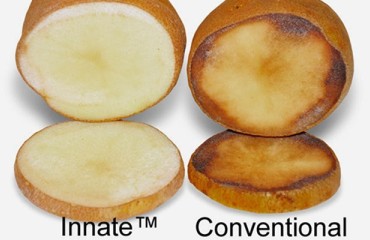
The petition is seeking deregulation of a potato genetically engineered (GE) for late blight resistance, low acrylamide potential, reduced black spot bruising, and lowered reducing sugars.
APHIS deregulates a GE product only after it concludes that the product is unlikely to pose a plant pest risk to agricultural crops and other plants and plant products.
The availability of the draft EA and preliminary PPRA will be announced in the Federal Register. The documents will be available for public review and comment for 30 days. The draft PPRA was conducted to determine whether the potatoes are likely to pose a plant pest risk, and the draft EA evaluates the effects on the quality of the human environment that may result from deregulation.
The environmental assessment is the first major regulatory requirement for plant material derived from biotechnology. The Innate Gen 2 potatoes were developed to have resistance to late blight and to be storable at lower temperatures. The announcement follows the recent FDA clearance of Innate Gen 1.
During the USDA review of Innate Gen 1 in 2014, National Potato Council (NPC) submitted comments in the second and final public environmental assessment comment period. The comments indicated that biotechnology "could effectively address key production and processing issues facing the potato industry." NPC went on to support a "strong science-based regulatory review to determine the safety and efficacy of varieties developed using biotechnology techniques".
The comments also focused on the need for strong identity preservation programs for biotech products to allow the food sector to respond to consumer preferences and to prevent market interruptions in foreign markets.
Related articles:
BLOG: GMO debate and the need for better product development, at IPPSC 2015
EU member states will have the freedom to decide on the GMOs use for food and feed
McDonald’s does not plan to use J.R. Simplot's GMO potatoes
SFA CEO urges American Congress to approve federal standard for GMO food labels
The US FDA gave green light to six varieties of GMO potatoes