Belpotato: 20-25% of the Belgian Potato Area Still Needs to be Harvested
The Belgian potato growing season began late due to unfavorable spring weather, which also prevented the autumn labor from beginning earlier.
September's high potato growth rate combined with the pleasant weather made for a large surplus of potatoes, much to the delight of growers and consumers alike. However, the high temperatures at the time were also unfavorable for harvesting potatoes for long-term storage.
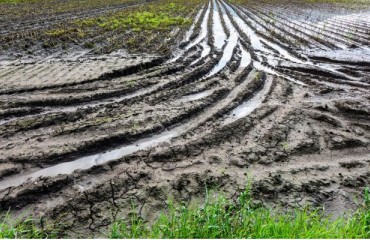
“The heavy rainfall in October and November now means that there are several plots that cannot be cleared. The situation is worst in West and East Flanders, the Kempen, and Hainaut, but there are also many problems elsewhere. It is estimated that between 20-25% of the Belgian potato area still needs to be harvested. Estimates speak of 10 to 15% in Wallonia and 20 to 30% in Flanders. This worries both growers and buyers. In many places there have been no days without precipitation for weeks,” the Belpotato advisors announced in their latest press release.
The experts previously cited further stated that potatoes that are left in water for a whole day eventually rot and are lost permanently. However, even on plots that do not flood, there are still challenging spots like spray tracks and headlands where there is greater water pressure.
“Plots are saturated with water, which means that potatoes can no longer breathe, which leads to rotting. Extra vigilance is therefore also necessary on plots where, at first glance, visually nothing seems to be wrong. The quality of the potatoes is rapidly deteriorating and their storage life is a major question mark. This means that even on plots that are still being cleared, some potatoes may be of lower quality. Monitoring during storage will require a lot of attention. Follow up daily and adjust where necessary based on storability!” the experts advised.
All parties involved in the potato supply chain are hoping for swift weather improvement to allow for the greatest amount of potatoes to be harvested and a sufficient supply all season long.
“There is certainly no supply problem in the short term, but if we cannot continue harvesting soon, this could cause problems before the end of the storage season,” the Belpotato representatives mentioned.
Back-up Solutions
In Belgium, contracted growing accounts for the majority of potato production. This indicates that since the price of these potatoes was predetermined at the time the contract was signed, the present circumstances will not affect it. But anyone signing a contract has to make good on this as well, and because of the unusual weather, some growers won't be able to. Even once harvesting is complete, storage issues could still occur and endanger the planned long-term storage.
“At Belpotato we would like to emphasize that if a problem occurs, or may occur, you must notify your customer as soon as possible so that we can find a solution together. If you are in doubt, it is better to contact us too early than to wait until the moment of delivery when it is hopelessly too late. We also refer to the code of conduct for drawing up contracts in the potato sector,” the advisors added.
Storage: the sector is making every effort to quickly process potatoes that can still be harvested and processed qualitatively, but which are not stored for a long time. If there is a different delivery period, we refer to the contract code of conduct (available on Belpotato.be).
Broad weather insurance: if the potato growers have taken out broad weather insurance, it is important to contact their insurance agent.
“Pay close attention to your policy conditions, as some policies no longer reimburse damage incurred after November 1,” the advisors mentioned.
Disaster Fund Flanders: Belpotato recommends collecting the necessary evidence (e.g. photos, delivery notes, etc.) to substantiate the damage. The damage report is preferably submitted via the e-desk of the Flemish Disaster Fund. Growers can also download a form from the Flemish government website or via this direct link.
“This document must be submitted to the Flemish Disaster Fund via disasterfonds@vlaanderen.be or to the address of the Flemish Disaster Fund stated in the form. The implementation decree of the Flemish Disaster Fund provides that the damage must be reported by the person affected within sixty days of the damaging weather phenomenon. In concrete terms, they want to relieve the burden on the municipalities and ask that farmers and horticulturists themselves estimate the damage amounts and report them directly. This notification is essential so that the Flemish government can acknowledge a disaster. In most cases, farmers no longer receive full compensation for damage that is in principle insurable through broad weather insurance, but there is a transition period until 2024 during which partial compensation is still possible. Belpotato wants to be vigilant here and not create false expectations,” the experts explained.
Wallonia Disaster Fund: potato growers can appeal to the crop damage assessment committees to have their damage recognized.
“One of the conditions for possible recognition by the disaster fund is that you have an average loss of 30% on all your potato areas in your CAP declaration,” the experts said.
Agricultural scale: It is also possible for the potato growers to appeal to the crop damage committee to claim their losses according to the fixed scale, from 20% losses.